




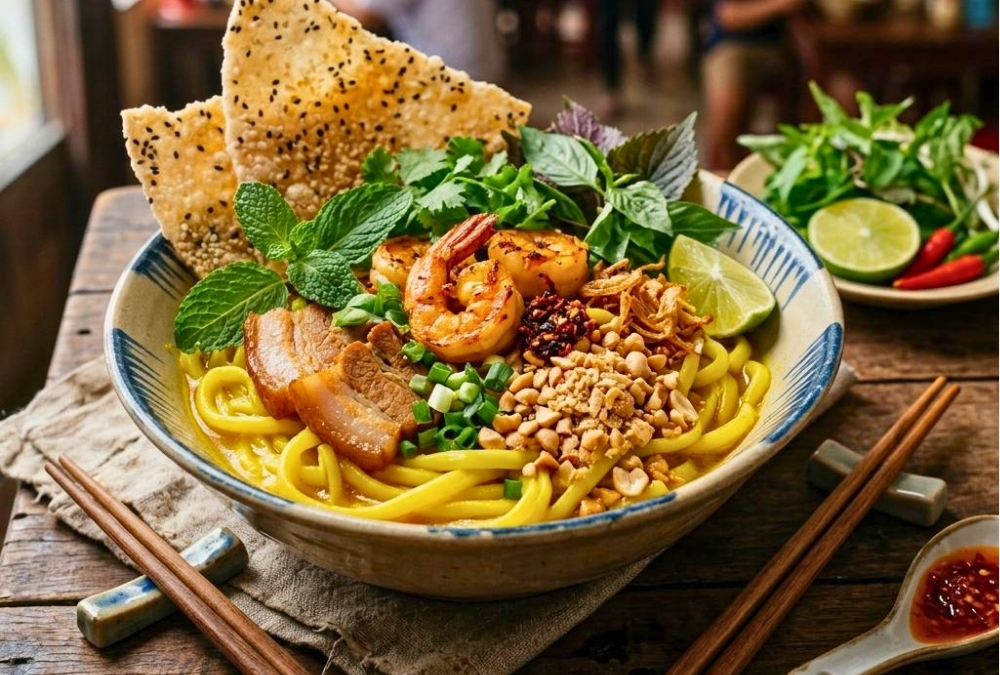
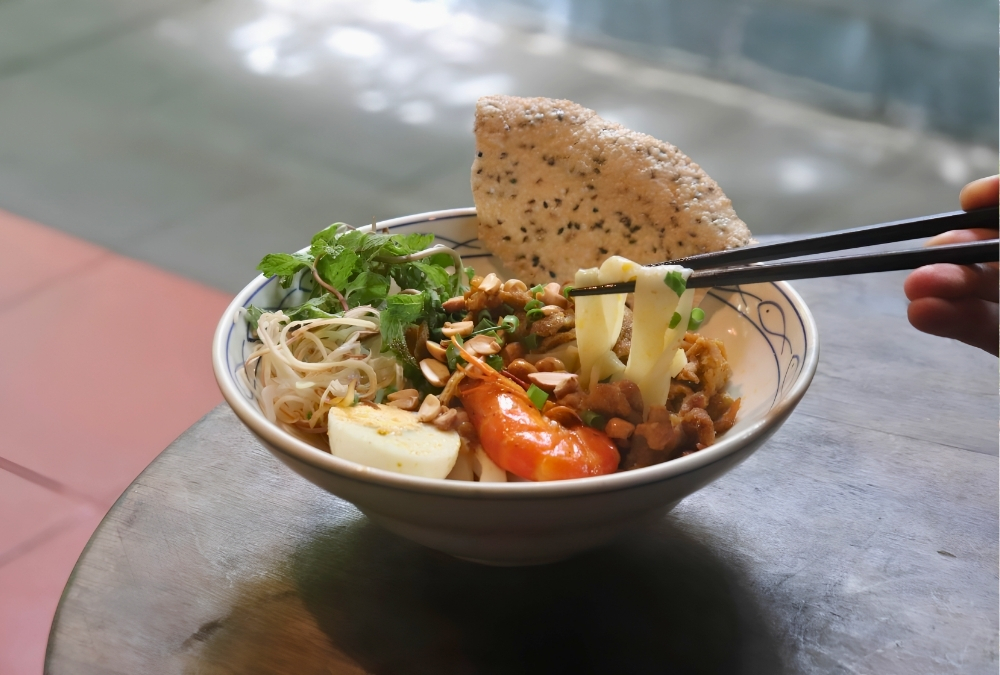
Walk into a family kitchen in Hoi An at seven in the morning and you will find a small crowd already eating mi Quang. Neighbours sit on low stools over bowls of turmeric-yellow noodles, a crispy rice cracker is cracked into each one, and a cook ladles a spoonful of dark, savoury sauce over the top.
- What is Mi Quang? Origins and meaning
- Mi Quang vs Cao Lau: Which do locals eat?
- What is in a bowl of Mi Quang?
- Where to eat Mi Quang in Hoi An: 5 local picks
- Mi Quang Ba Minh: Best for an early local breakfast
- Mi Quang Co Sinh: Best for a quiet family kitchen
- Mi Quang 92: Best for choosing between fish, beef, shrimp or vegetarian
- Mrs Thoi’s Noodle Stall in Phu Chiem: Best for a village bowl
- NOODLE House by STREETS: Best for comparing three noodles at lunch
- A morning food route: Two bowls before lunch
- How to eat Mi Quang the local way
- Other ways to eat Mi Quang: Clay-pot bowls and Da Nang versions
- How much does Mi Quang cost in Hoi An?
- Tips before you go
- FAQs
The dish is cheap, quick and cooked in almost every household, which makes it the best window into how people here really eat. This guide explains what mi Quang is, why it tastes the way it does, and where to eat it in Hoi An.
What is Mi Quang? Origins and meaning
Mi Quang is the signature noodle of Quang Nam province, which includes Hoi An and, until 1997, Da Nang as well. The noodles are made from rice batter that is steamed into thin sheets and then cut into wide, flat ribbons, so they are chewy rather than silky. In Hoi An, a bowl comes with a small amount of savoury sauce, roasted peanuts, fresh herbs and a toasted rice cracker, and it is not meant to be a soup.
The name itself is telling. At home, people here simply say “mi”, and “mi Quang” is how outsiders recognise it as a product of the province. It began as village food, and for a long time its stalls were found in markets and in the countryside rather than on the old town’s streets, while cao lau was the dish of merchants and townspeople.
The origins are a little disputed, which is part of the charm. Researcher Ton That Huong dates the dish to around the 16th century, as a result of cultural and culinary exchange between Viet and Cham communities. Other researchers point to the trading port of Hoi An, where the idea of wheat noodles arrived with Chinese and Japanese merchants and local cooks reinterpreted it with rice.
Mi Quang vs Cao Lau: Which do locals eat?
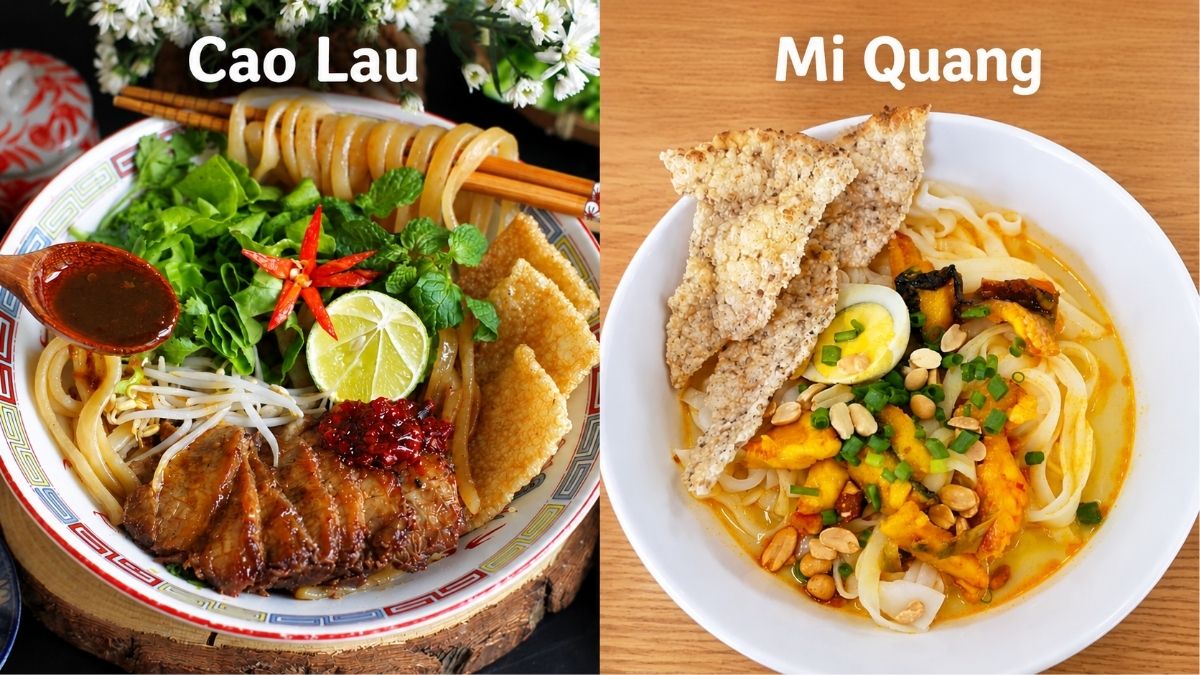
Anthropologist Nir Avieli of Ben-Gurion University, who studied food in Hoi An in the 1990s, once asked a local friend to take him to the best cao lau in town and was surprised to watch her order mi Quang instead. He later concluded that the most popular noodle among residents is mi Quang, not cao lau, and that it is eaten mainly at breakfast and lunch. The lesson is practical as well as cultural, because the best bowls sell out by late morning.
He also noticed that the sauce tastes different in Da Nang than it does in Hoi An. That matches what people say about every regional dish, and it is the reason to eat mi Quang in Hoi An even if you tried it in the city. Each kitchen has its own sauce, its own noodle supplier and its own way of balancing sweet, salty and sour (Source: Bao Thanh Nien).
| Mi Quang | Cao lau | |
| Noodles | Flat, wide, often turmeric-yellow | Round, thick, dark and chewy |
| Sauce | a small pool of savoury sauce | Barely any, just enough to coat |
| Topping | Shrimp, pork or chicken, quail egg, peanuts | Sliced char siu pork, crisp croutons |
| Cracker | a toasted rice cracker, broken into the bowl | Fried croutons, no cracker |
| Origin | Quang Nam province | Hoi An only |
| Best time | Breakfast and lunch | Lunch and dinner |
| Typical price | 25,000-45,000 VND at a family kitchen | 35,000-55,000 VND |
Read more: Top 5 best Cao Lau in Hoi An: Local restaurants and how to eat it properly
What is in a bowl of Mi Quang?
A traditional bowl is built in layers. A heap of noodles goes in first, then a spoonful of sauce made from shrimp, pork or chicken simmered with tomato, pineapple and onion, and then a quail egg or two. Roasted peanuts and fried shallots finish it, with a plate of herbs and a rice cracker on the side.
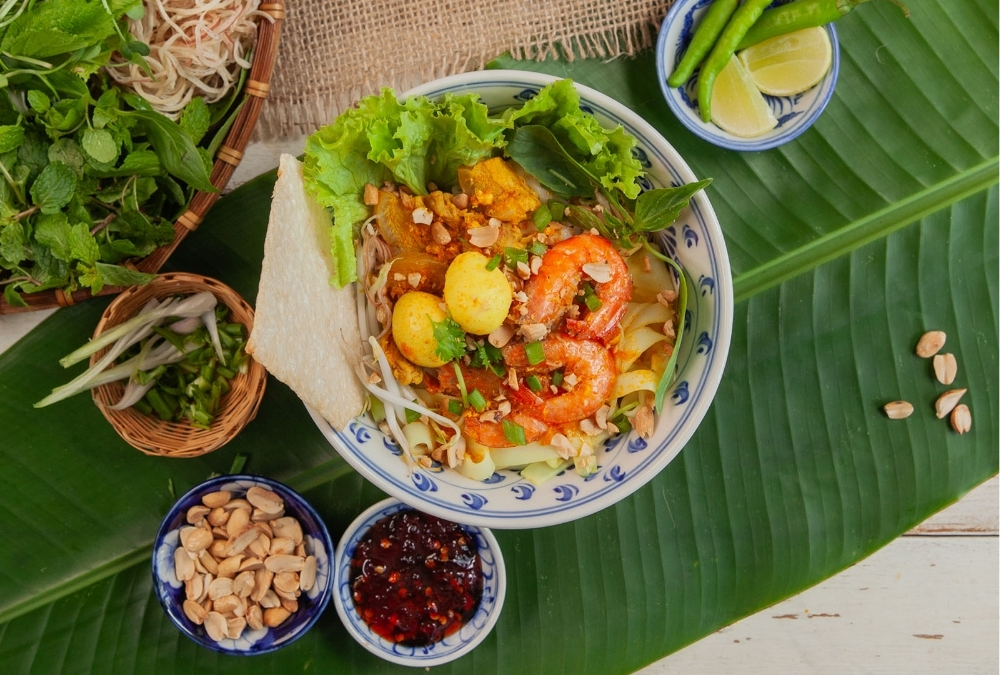
The herbs matter more than they seem. Locals say a proper bowl needs raw vegetables from the Tra Que village northeast of the old town, such as bitter herbs, fish mint, basil and perilla, because their sharpness lifts the sauce. You tear them into the bowl a few leaves at a time rather than leaving them on the plate.
Then there is the sauce itself, which is what separates a good kitchen from an average one. Chef Summer Le, who grew up eating mi Quang every week in Da Nang, describes the dish as humble, limited ingredients turned into something delicious. The small amount of liquid fits that story, and chef Peter Cuong Franklin, whose mother came from Quang Nam, explains it simply: with only a little liquid, you can feed more people with less money.
Where to eat Mi Quang in Hoi An: 5 local picks
The five places below were chosen from Google Maps ratings, recent reviews and what each does differently. Four are in Hoi An and one is in the noodle-making area of Dien Ban. Opening hours matter, because the best morning kitchens close by late morning.
| Place | Best for | Hours | Rating |
| Mi Quang Ba Minh | The earliest, most local breakfast | 06:00-10:30 | 4.9★ (268) |
| Mi Quang Co Sinh | a quiet alley kitchen | 06:00-14:00 | 4.8★ (133) |
| Mi Quang 92 | Variety, including vegetarian | 06:30-20:00 | 4.9★ (1,479) |
| Mrs Thoi’s Phu Chiem noodles | a village bowl, award-winning cook | 06:00-11:00 | 5.0★ (14) |
| NOODLE House by STREETS | a tasting flight for lunch or dinner | 11:30-15:00, 17:00-21:00 | 4.9★ (1,337) |
Mi Quang Ba Minh: Best for an early local breakfast
- 61 Duong 18/8 · 4.9★ (268 reviews) · 06:00-10:30 · +84 905 110 453
Ba Minh is the kind of place where you arrive at 6:30, sit down, and get a bowl almost immediately. Within ten minutes the tables fill with neighbours, and more people ride up on motorbikes to take bowls home. The menu is short, and one diner who needed a very early breakfast found that it serves essentially only noodles.
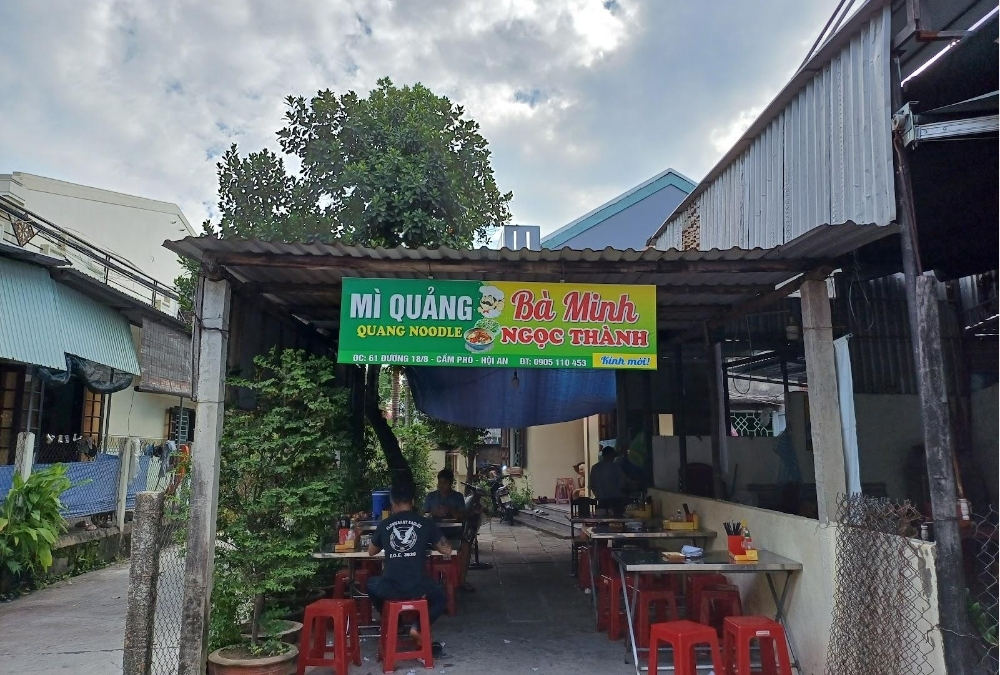
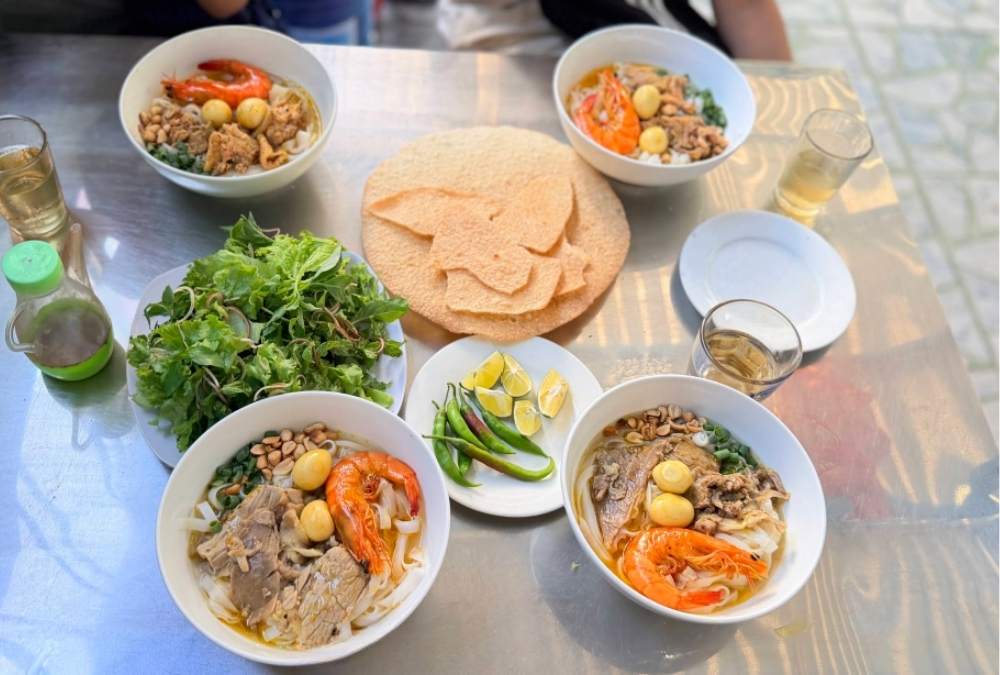
The bowl arrives in a white porcelain dish, which is how mi used to be served in Hoi An. The sauce tastes light and delicate rather than oily, and one regular says this is where locals come when they want the real thing. The cook speaks English and enjoys explaining the dish, and extra quail eggs are happily added on request.
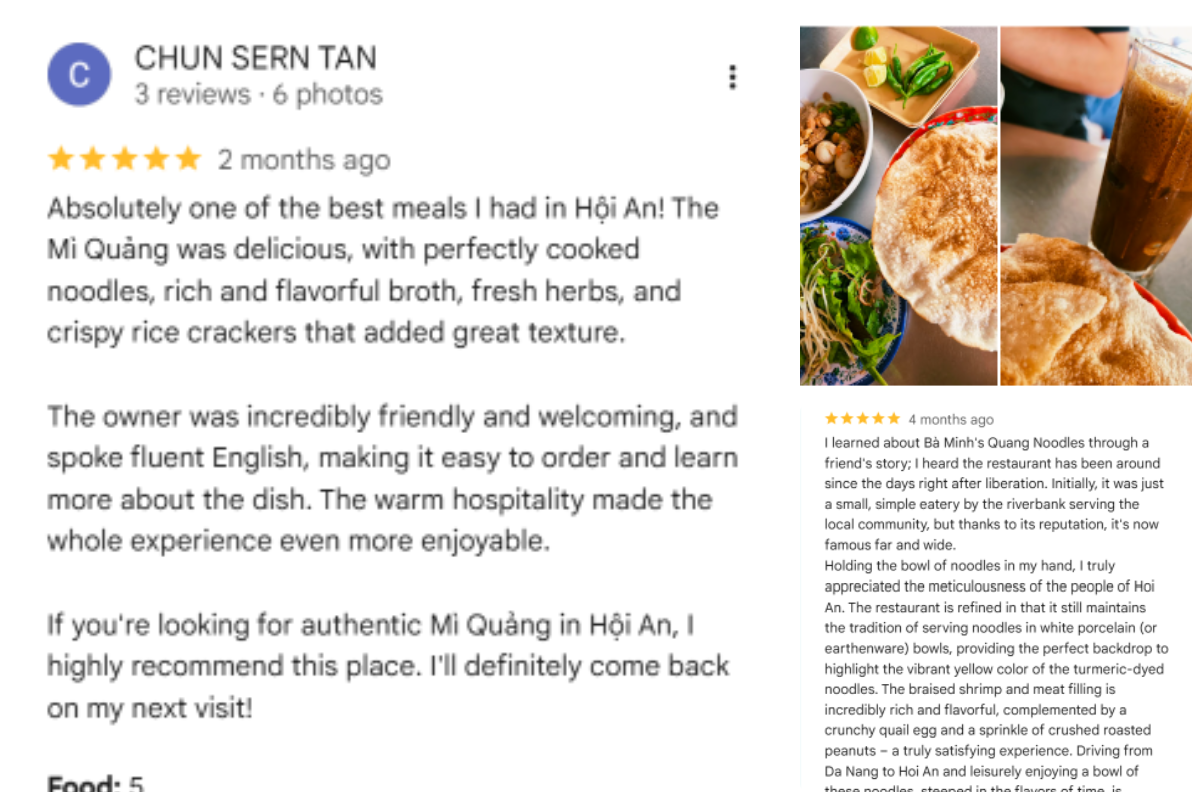
Aim to arrive before 9:00, since the shop closes at 10:30 and popular mornings can sell out earlier.
Mi Quang Co Sinh: Best for a quiet family kitchen
- Hem 170/5 Ly Thuong Kiet · 4.8★ (133 reviews) · 06:00-14:00 · +84 905 025 835
Tucked away in a quiet alley off Ly Thuong Kiet Street, Aunt Sinh’s family has been making mi Quang for nearly 30 years. Simple tables, a warm family atmosphere and traditional cooking make this a welcoming spot, far removed from the busy streets of Hoi An’s Old Town. Locals often recommend it to visitors who want to taste authentic Quang Nam cuisine.
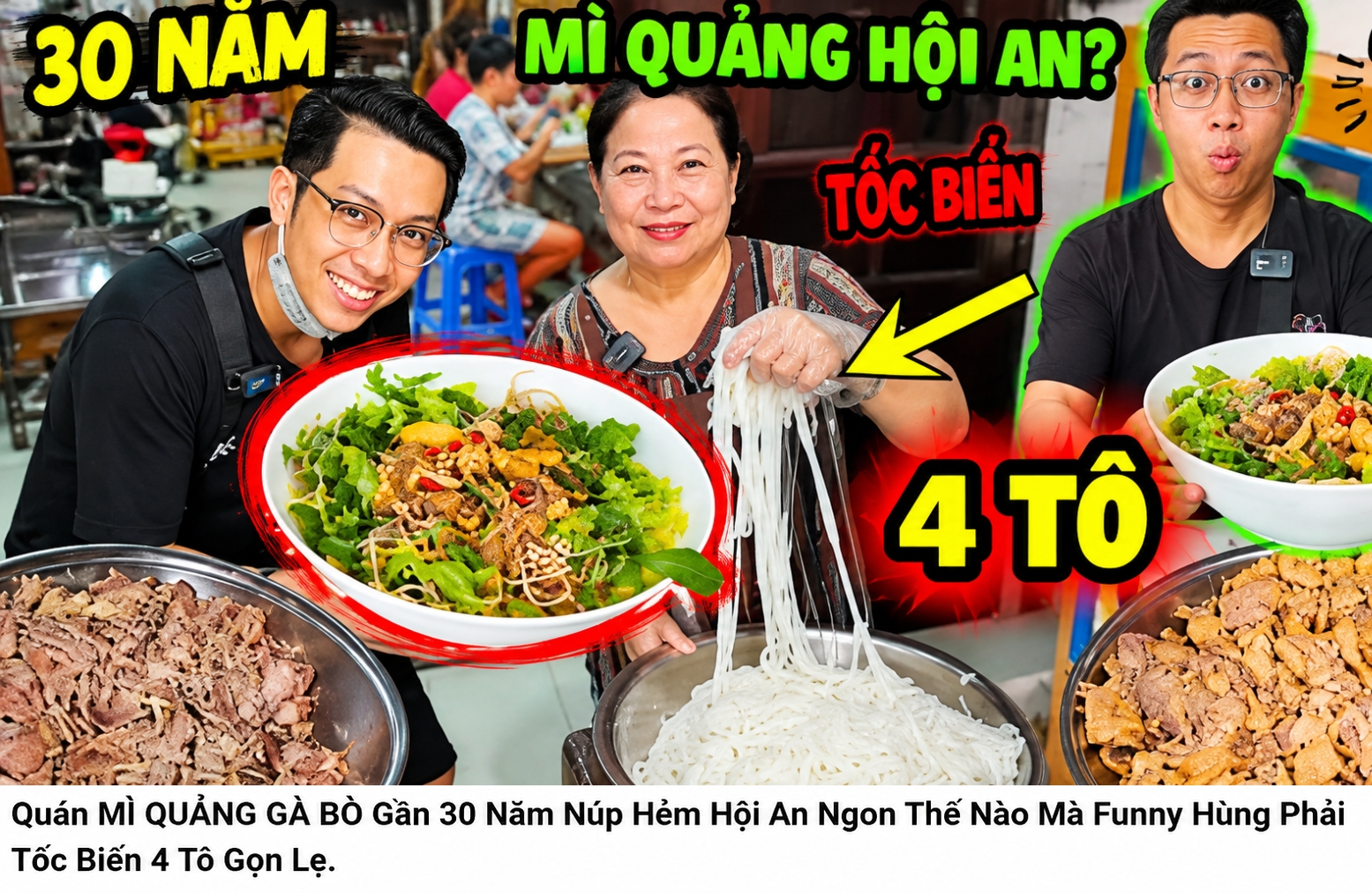
The menu is straightforward, with chicken, beef, shrimp, pork or a combination of several meats. Chicken mi Quang is the house speciality, featuring noodles coated in fragrant peanut oil, tender chicken and crispy rice crackers. Food reviewer Funny Hung once cycled to the restaurant to try its famous noodles and praised their authentic Quang Nam flavour. He even joked that eating the dish made him feel as though he had been born and raised in Quang Nam, finishing four bowls during his visit.
The prices are affordable, the portions are just right, and the restaurant stays open until 2:00 PM, making it a great spot for those who prefer a late breakfast or missed the earlier breakfast rush. However, as the menu consists exclusively of meat-based dishes, it is not a suitable option for vegetarians.
Mi Quang 92: Best for choosing between fish, beef, shrimp or vegetarian
- 112a Tran Cao Van · 4.9★ (1,479 reviews) · 06:30-20:00 · +84 935 704 030
This is the place for anyone who wants to compare. Its sign lists snakehead fish, beef, and shrimp-and-pork versions, and the kitchen also makes a vegetarian bowl with tofu and mushrooms. Both bowls come with the same fresh herbs, a toasted cracker, and a small bottle of chilli and fish sauce to season to taste.
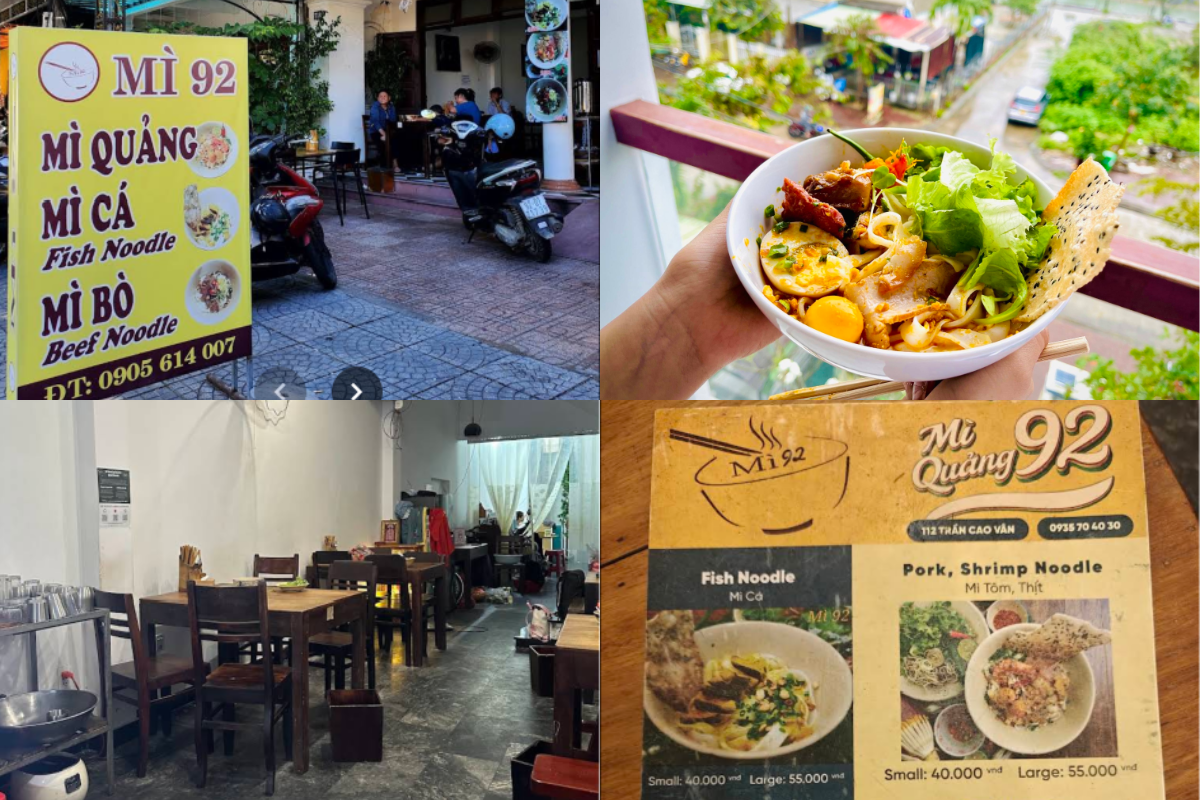
The broth is light and tasty, and the noodles have a pleasant bite. The owner explains how to eat the bowl properly, and a visitor who returned a week later says the family’s care made her feel safe. The shop sits away from the busiest pedestrian streets, so you can eat in a calm setting.
It is open until 20:00, which makes it one of the few kitchens where a late visitor can still eat well.
Mrs Thoi’s Noodle Stall in Phu Chiem: Best for a village bowl
- Nguyen Du, Dien Ban · 5.0★ (14 reviews) · 06:00-11:00
Phu Chiem is one of the villages that make Quang Nam’s noodles by hand, and it sits about seven kilometres west of the Old Town. The village is known for traditional chicken mi and for noodle-making skills passed down across generations. Mrs Thới serves her bowls from an old three-room house near Highway 1a, and locals say she won a top prize at a mi Quang festival.
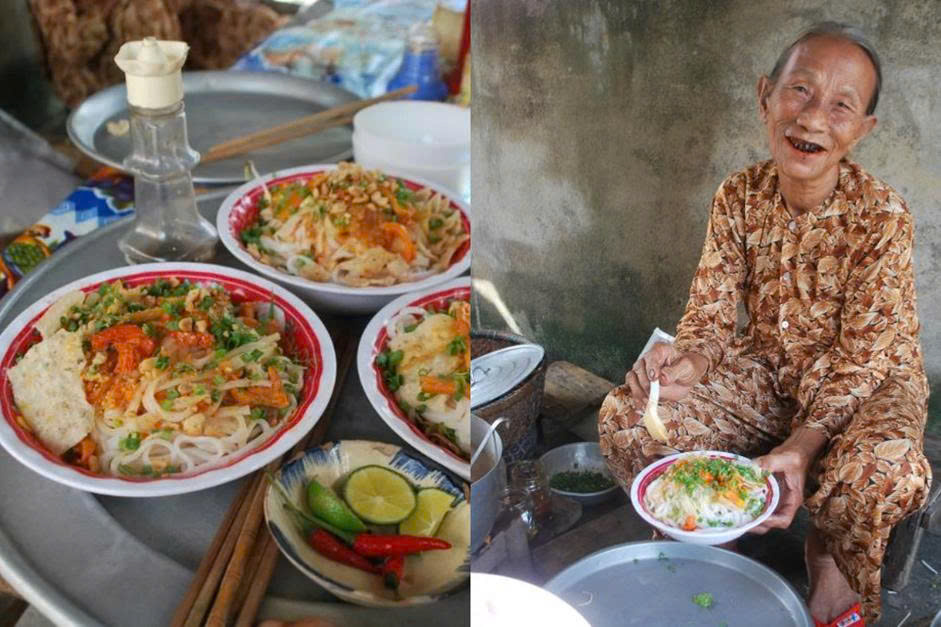
She has been invited to cook at many events but has never wanted to turn the stall into a business. Customers say a full bowl costs around 20,000 VND, about a third of what similar bowls sell for in Da Nang. A visitor who first ate here as a child, now nearly 40, still goes back.
NOODLE House by STREETS: Best for comparing three noodles at lunch
- 512 Hai Ba Trung · 4.9★ (1,337 reviews) · 11:30-15:00 and 17:00-21:00 · +84 942 016 787
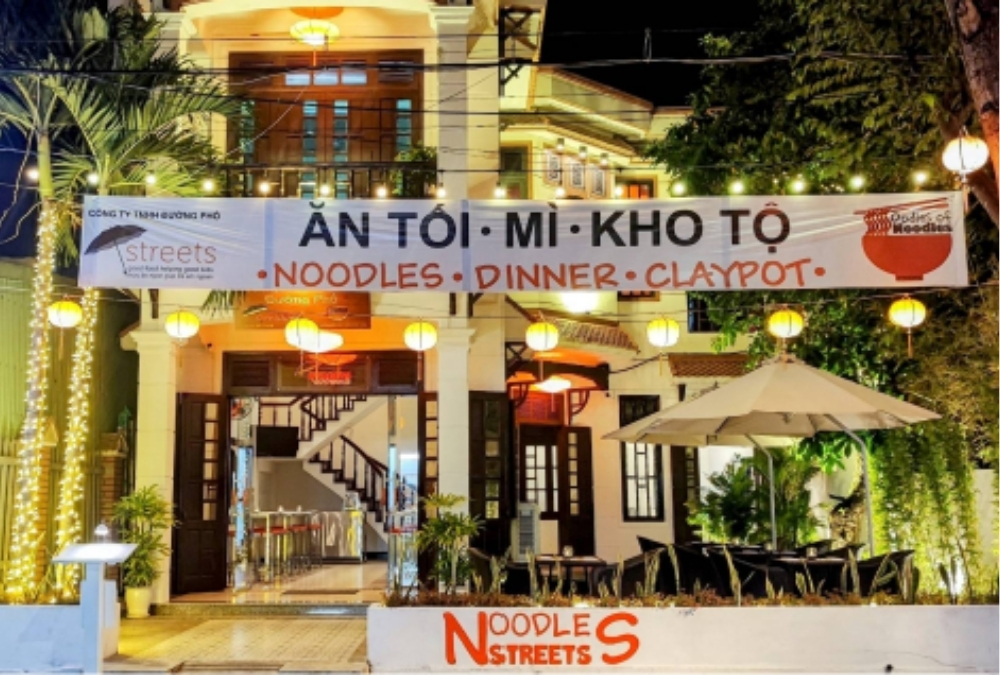
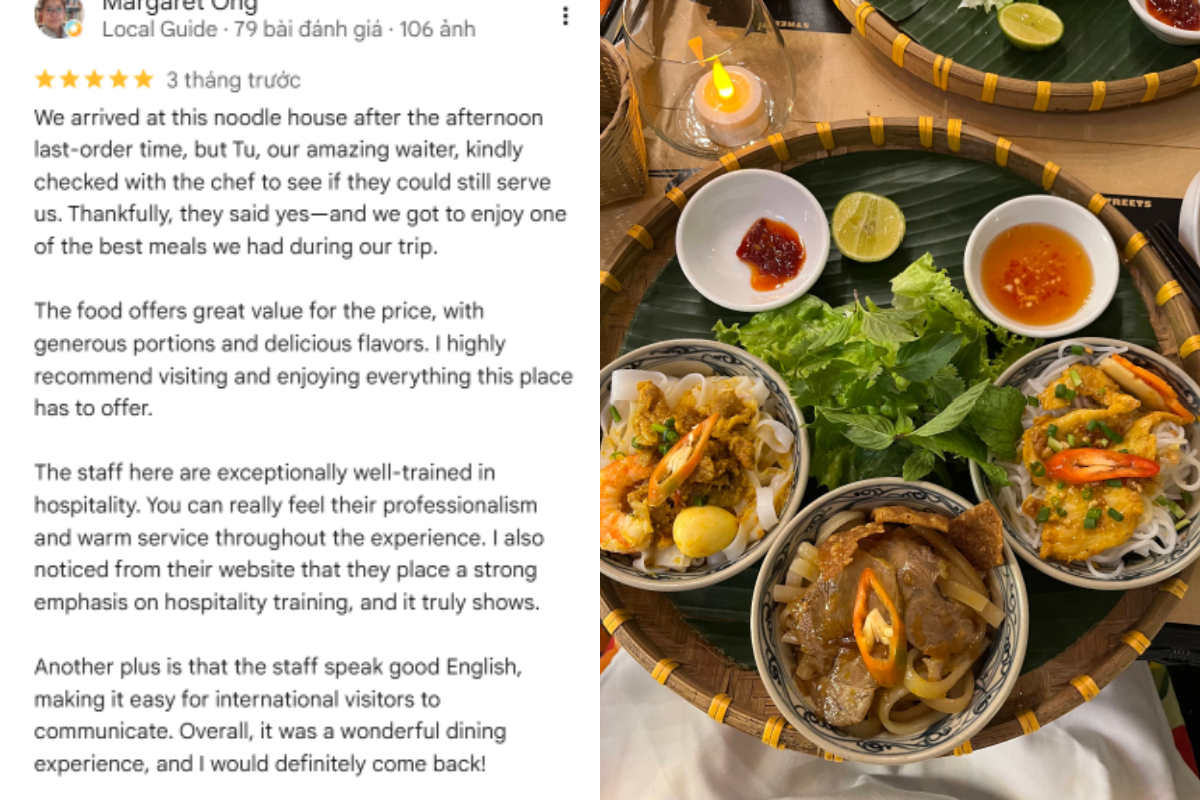
Most mi Quang kitchens close by lunchtime, so this restaurant solves the problem for anyone who slept in. It serves a flight of three Hoi An noodles, mi Quang, cao lau and bún ca, in small bowls so you can compare them side by side. A guest called it a fun way to understand local noodles, and others recommend the braised pork and the bread pudding.
The restaurant is also a social enterprise that trains young people from disadvantaged backgrounds in hospitality. Staff speak good English and happily explain the story, and diners praise the attentive service. Prices are slightly higher than a street stall, and that pays for the training programme. It is a good choice for lunch if you want to compare noodles, but a family kitchen remains the best place for breakfast.
A morning food route: Two bowls before lunch
Because the best bowls sell out early, a mi Quang morning works best as a short route. Use the plan below as a template and adjust it to your hotel.
- 6:30 – 7:30: Mi Quang Ba Minh. Arrive when the first pots are ready and the tables are still half empty. Order the mixed bowl, and ask for an extra quail egg if you like.
- 8:00 – 9:30: a walk by the river. Burn off breakfast by strolling along the Hoai River, where fishermen and flower sellers set up. The streets are quiet, and the light is soft.
- 10:00 – 11:00: a second bowl at Mrs Thoi’s. Ride or take a Grab to Phu Chiem and compare a village bowl with the town one. The noodles and the herbs will taste different, which is the point.
- 12:00 – 13:30: Lunch at NOODLE House. If you still have room, the tasting flight lets you compare mi Quang with cao lau and bun ca. Otherwise, rest until the evening.
Prefer a guide? Hoi An Travel’s Rice Paper Making & Cooking in Kim Bong runs about 4.5 hours, from 790,000 VND, and shows how rice paper is made by hand. It is the same craft logic as the noodle sheets, and it makes eating mi Quang afterwards feel much more connected. For evening dishes that never appear at breakfast, the Hoi An Street Food Tour starts at 3:00 PM, lasts 4 hours and visits hidden stalls in the Old Town alleys, from 1,380,000 VND.
How to eat Mi Quang the local way
A bowl of mi Quang can look odd to a first-timer, because the sauce is only a small pool at the bottom. That is not a mistake, and these habits help you enjoy it the way locals do.
- Use the cracker: Break a piece off and scoop it into the bowl between bites, because it absorbs the sauce and adds crunch.
- Mix first: Lift and turn the noodles with chopsticks for the first 20 seconds so every strand is coated.
- Taste before seasoning: Add fish sauce, chilli or lime a little at a time, because the bowl is already seasoned.
- Tear the herbs in: Treat the herb plate as part of the dish, not a garnish.
- Do not ask for extra broth: More liquid turns it into a weaker soup, and the small pool is the point.
- Order chicken first: The chicken bowl is the mildest, so save shrimp and pork for your second visit.
Other ways to eat Mi Quang: Clay-pot bowls and Da Nang versions
Mi Quang is flexible, so cooks keep reinventing it. In the old days the protein could be chicken, shrimp and pork, snakehead fish, beef, frog, crab or jellyfish, depending on what the village had. Hoi An’s brackish estuary produces unusually sweet shrimp and crabs, which is why shrimp and crab bowls became signature versions here, and local cooks also add jellyfish for its crunch.
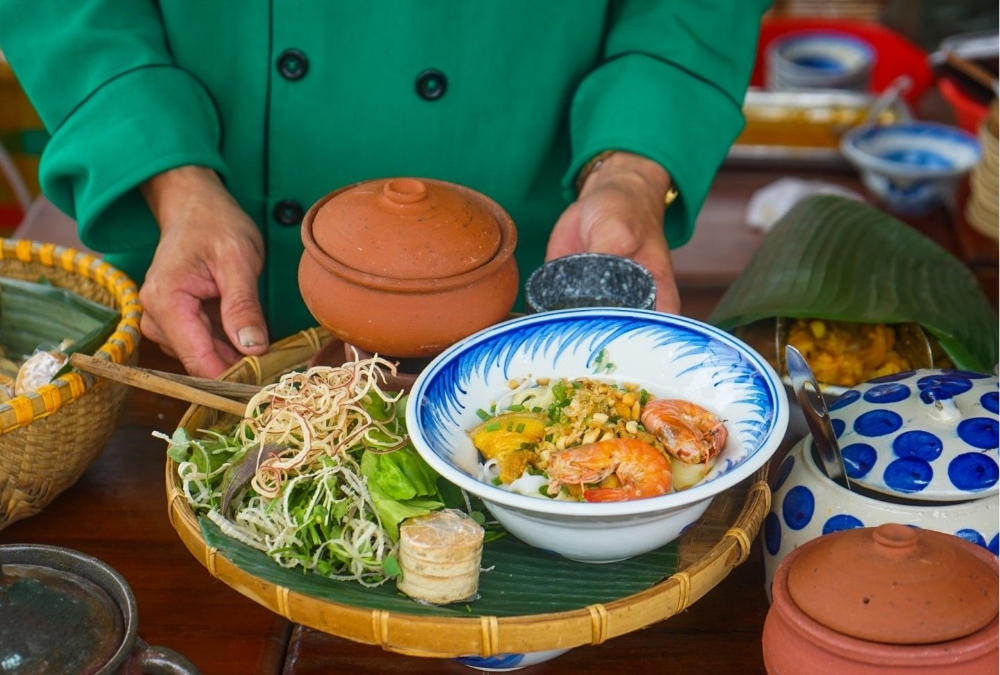
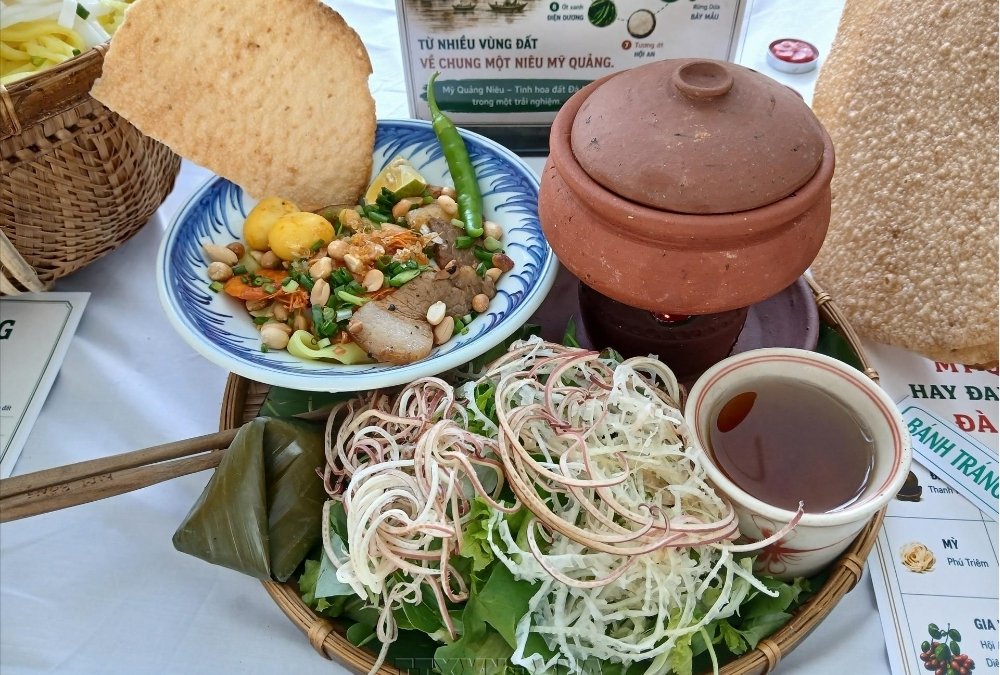
A newer twist appeared in 2022, when a Hoi An cook named Le Minh Canh began serving the sauce in a small clay pot. The dish uses ingredients from several Hoi An villages, including noodles from Phu Chiem, herbs from Tra Que, a clay pot from Thanh Ha and chopsticks from the Kim Bong carpentry village. The idea is to introduce guests to the craft villages while they eat. His shop was in Cam Thanh in 2023, so check whether it is still open before you go (Source: vietnamnet.vn).
If your trip continues to Da Nang, three Michelin-listed restaurants there are worth a stop. Mi Quang 1a serves the classic toppings of shrimp, chicken and pork, My Quang Sua Hong Van holds a Bib Gourmand for its jellyfish version, and Nu Do Kitchen serves an elevated bowl in a garden courtyard. Eating one bowl in each city is the easiest way to taste how the sauce changes between them.
How much does Mi Quang cost in Hoi An?
| item | Typical cost |
| Bowl at a family kitchen | 25,000-45,000 VND |
| Bowl at a village stall (Phu Chiem) | about 20,000 VND |
| Bowl with extra toppings | a little more, depending on the shop |
| Cao lau for comparison | 35,000-55,000 VND |
| Rice Paper Making & Cooking in Kim Bong | from 790,000 VND |
| Hoi An Street Food Tour | from 1,380,000 VND |
Tips before you go
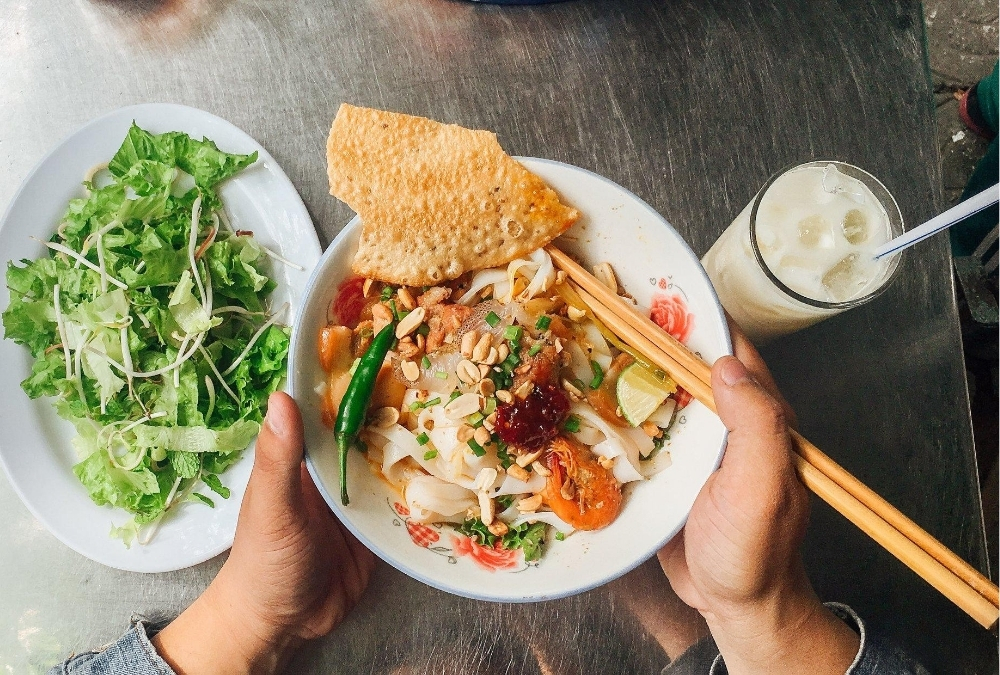
Cash is the norm in family kitchens, so carry small notes. Most places open around 6:00 and sell out by late morning, so an early start gives you the best choice. If you are allergic to shrimp or peanuts, say so clearly before ordering, because both appear in almost every bowl.
A short phrase helps: “mot to mi Quang ga” means one bowl of chicken mi Quang, and “khong cay” means not spicy. Most cooks are used to pointing and smiling, so do not worry about the language. A few thousand dong of change on the table is appreciated but never expected.
Mi Quang is more than a bowl of noodles; it is a taste of Quang Nam’s food culture and everyday life. From the family kitchens of Hoi An to the traditional noodle-making village of Phu Chiem, each bowl carries its own flavours and local stories. Start your morning with a bowl while it is still fresh, try different toppings, and take the time to enjoy it like a local. It is a simple but memorable way to experience Hoi An beyond its famous streets.
FAQs
What is the difference between mi Quang and cao lau?
Mi Quang has wide noodles and a little savoury broth, while cao lau features thick, chewy noodles and sliced pork. Mi Quang is an everyday local dish; cao lau is a Hoi An specialty.
What time should I eat mi Quang in Hoi An?
Visit between 6:00 and 10:00 AM, as most family-run kitchens close by late morning. Mi Quang 92 and NOODLE House serve later.
Is mi Quang vegetarian?
Traditional mi Quang contains shrimp, pork or chicken. Some places, including Mi Quang 92, offer vegetarian versions with tofu and mushrooms. Ask about fish sauce when ordering.
How much does a bowl cost?
About 25,000-45,000 VND at a family kitchen, and around 20,000 VND at a village stall. Prices above 80,000 VND in the Old Town are usually a tourist markup. Extra toppings add a little.
Is mi Quang spicy?
Not by default. Fresh chilli and chilli sauce sit on the table so you can add heat yourself. ask for “khong cay” if you want to avoid it entirely.