




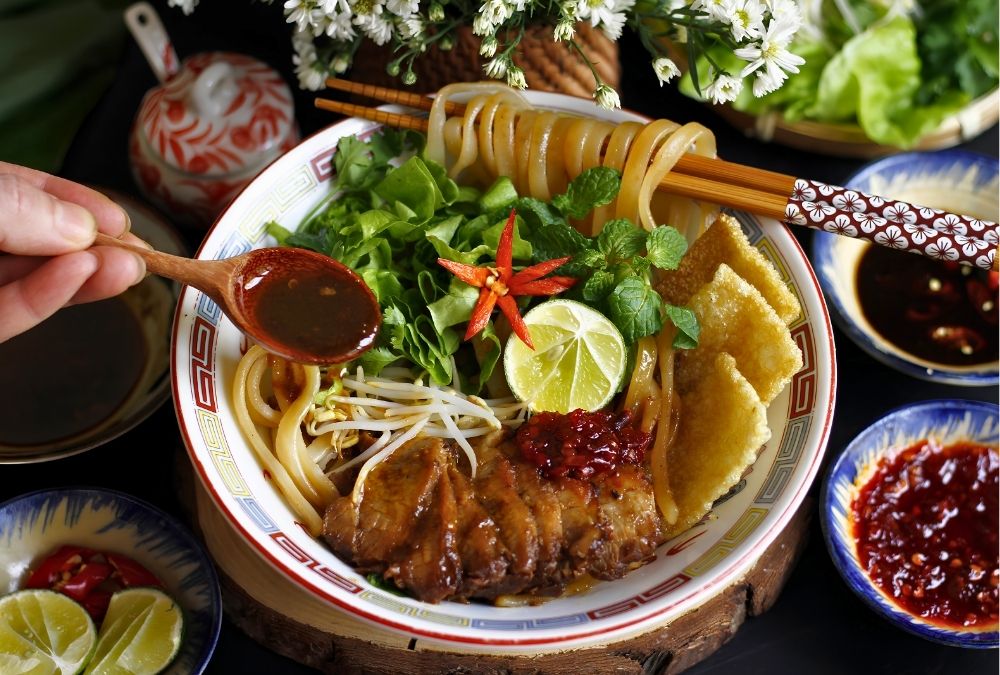
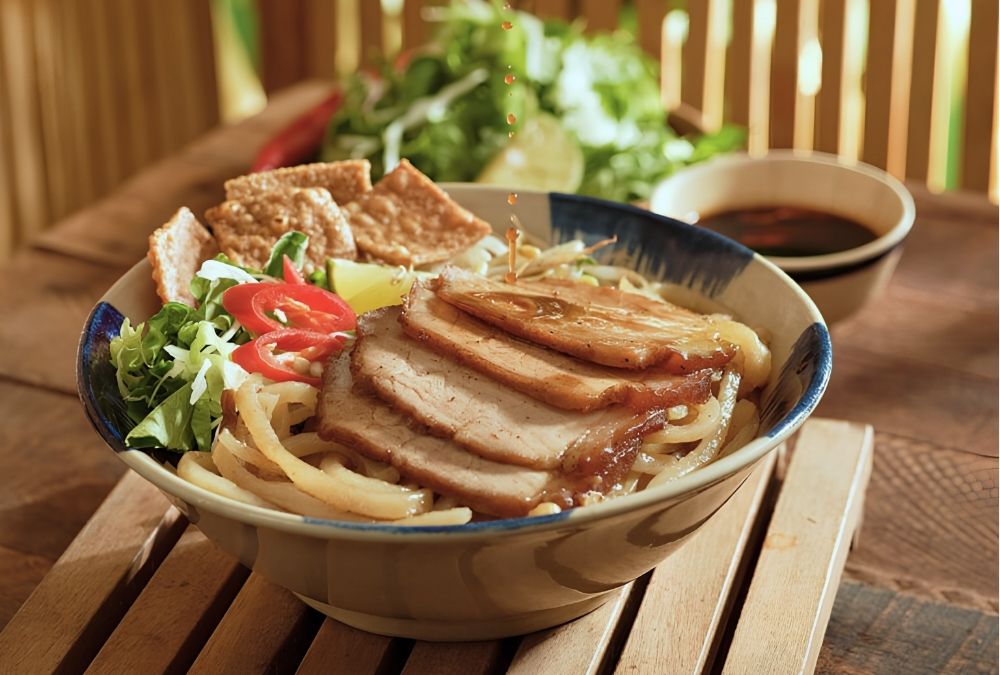
Cao Lau is the one dish in Hoi An that cannot be copied elsewhere. Thick, pale-gold noodles, a few slices of char siu pork, a handful of herbs, crisp fried squares of noodle dough, and a small pool of dark sauce. It arrives almost dry, nothing like the soups most visitors expect from Vietnamese noodles.
Hoi An has hundreds of places that list Cao Lau on the menu, and only a fraction cook it well. This guide covers what makes a good bowl, how to spot a bad one, and five restaurants worth the walk.
What is Cao Lau?
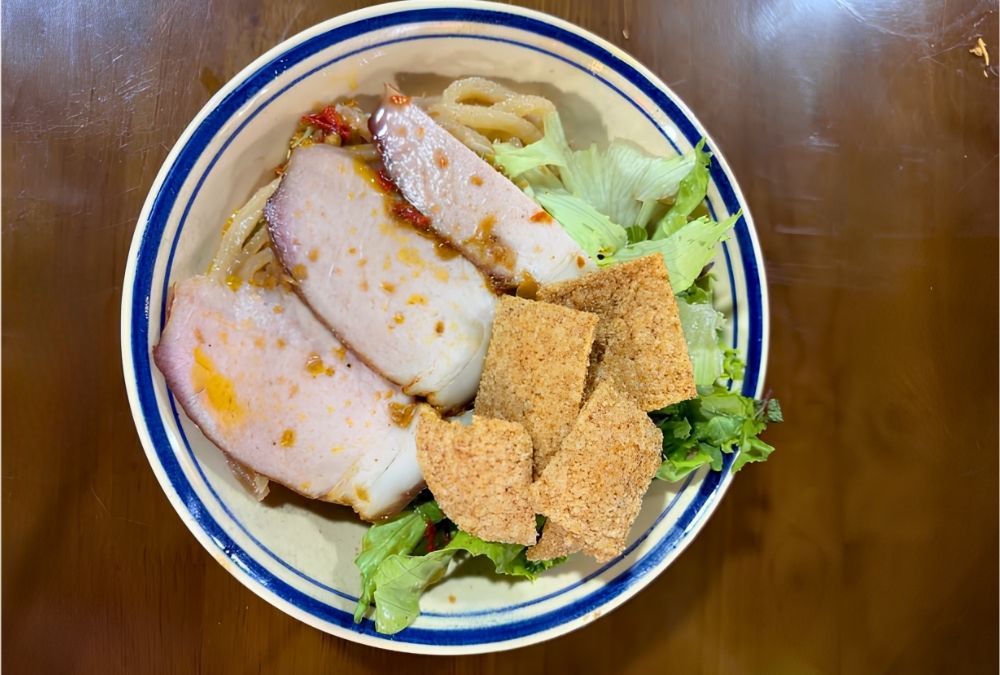
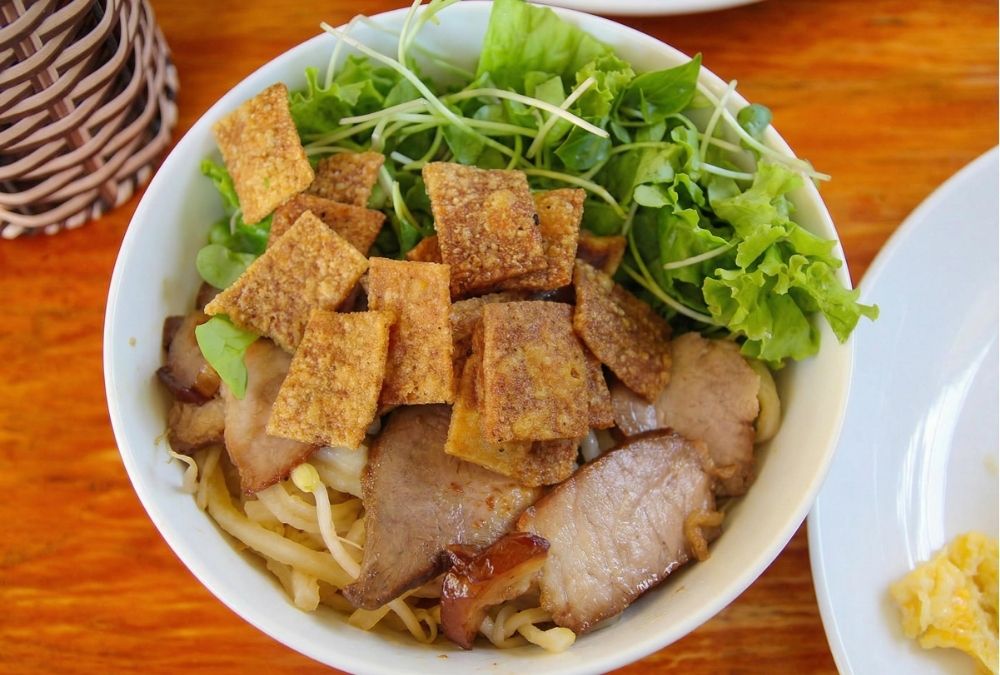
A bowl starts with chewy, slightly springy noodles in a pale yellow tint, topped with slices of pork simmered in five-spice and soy. Bean sprouts and fresh herbs go on top, along with crisp squares fried from the same dough as the noodles. Only a small amount of the pork’s cooking liquid dresses the bowl, so it eats closer to a dressed noodle salad than a soup.
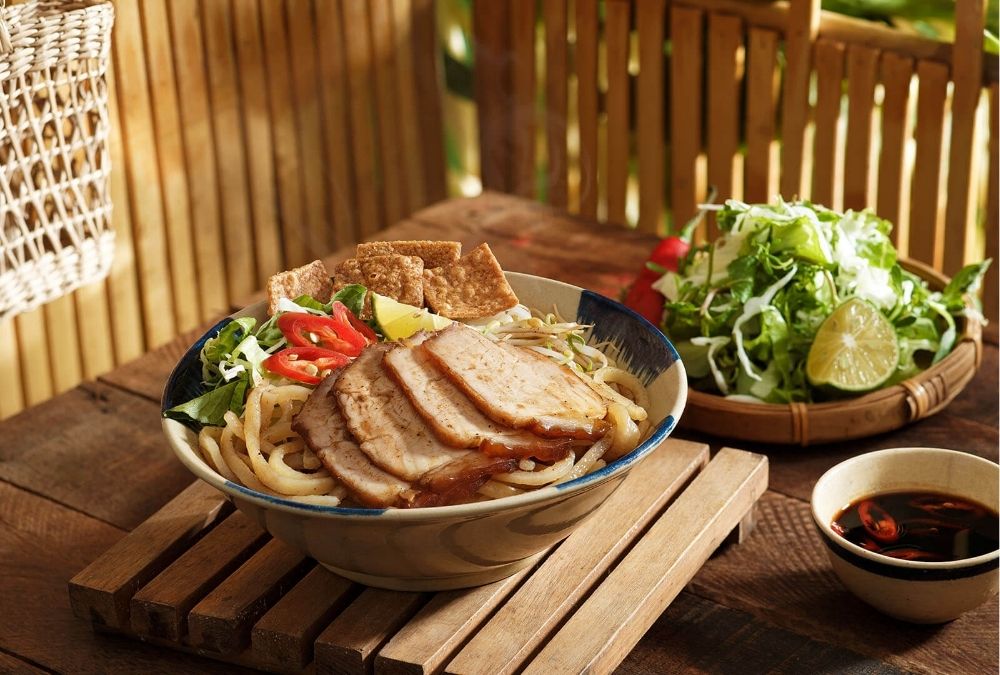
The traditional herb set is short: young mustard greens, tan o (garland chrysanthemum) and rau dang (bitter herb), ideally from Tra Que Vegetable Village, whose greens are more fragrant than most. Mint belongs to mi Quang, not Cao Lau, and a bowl dressed with the wrong greens is not the real thing.
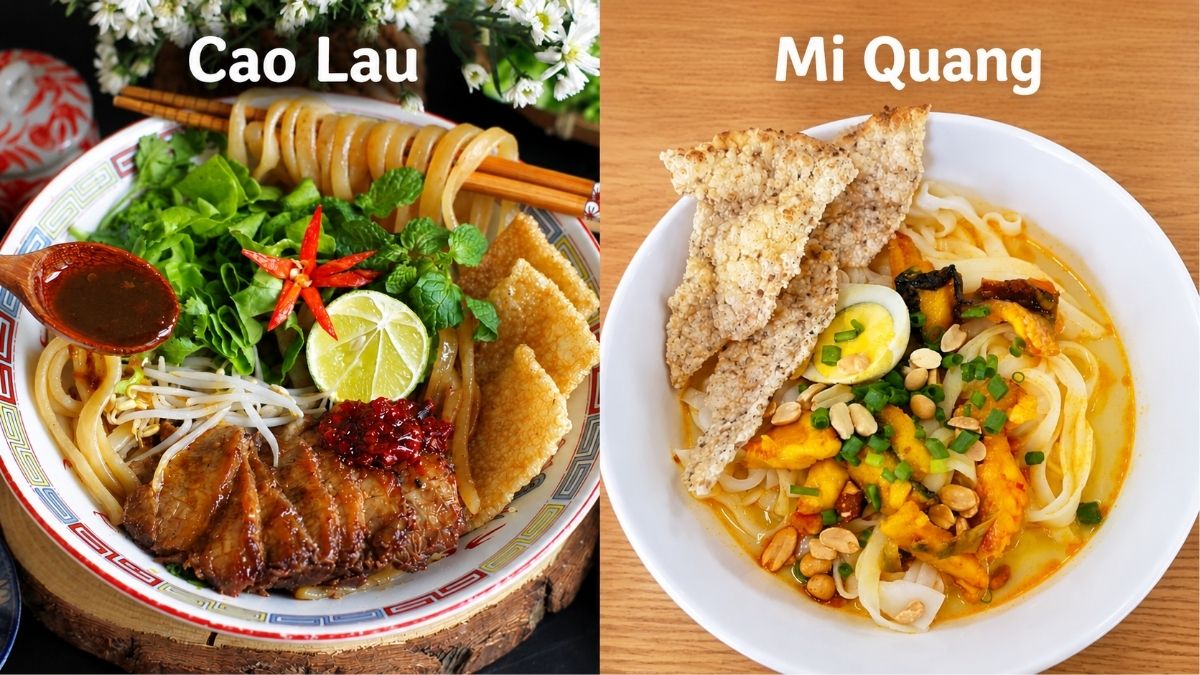
Cao Lau vs Mi Quang: Why they are not the same
At a glance the two dishes look alike: rice noodles, pork, herbs, little broth. But Cao Lau is far stricter.
- One topping only: Mi Quang can come with shrimp, fish, chicken or pork. Cao Lau uses only pork xíu.
- No soup: The “broth” is just the liquid left from cooking the pork: thick, salty and rich.
- Different noodles: Cao Lau noodles are firmer and chewier, and they are made in a very different way (see below).
- Different eating style: Mi Quang suits big mouthfuls and slurping. Cao Lau is meant to be nibbled slowly, so the flavour of ash-soaked rice comes through.
How Cao Lau noodles are made
The noodles are what separate Cao Lau from every other Vietnamese noodle dish. Three ordinary things go into them: hard-grained rice, clear water and filtered wood ash. The rice is soaked overnight, ground into liquid flour, and cooked into a thick paste with ash water. The dough is steamed, kneaded, rolled thin and cut into strips, then steamed again. Most noodles are cut after cooking. These are cut first and cooked second, which leaves no knife or mould marks and gives the strands a slightly hollow core that soaks up sauce without falling apart.
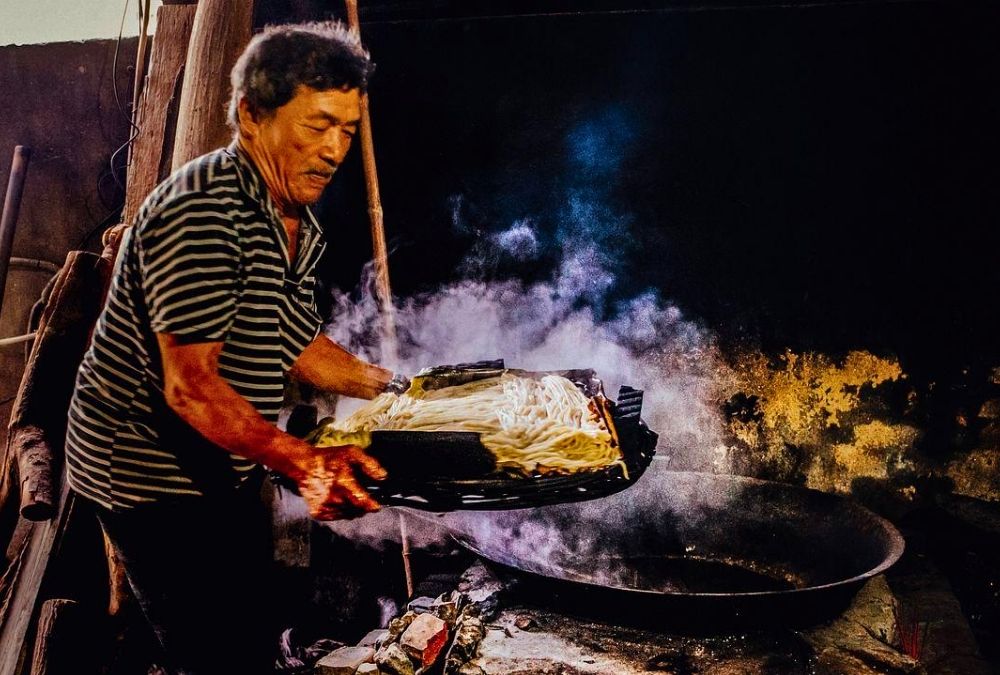
Tradition ties the water to the old Ba Le well in the Old Town, and the ash to firewood from the Cu Lao Cham islands, although which tree is used differs from workshop to workshop. The ash water also gives the noodles their yellow tint and helps them keep for a day or two without refrigeration. Noodle makers start work around 1 a.m., and a single household turns out roughly 200 kg by early morning.
Two practical points follow from this. Machine-pressing the noodles too hard makes them stiff and dry, which is why some bowls disappoint. And because only a handful of households still make the noodles, many restaurants buy them from a well-known workshop rather than make their own.
Read more: Market-to-Table Cooking Class by Bicycle
How to eat Cao Lau the right way
- Mix everything first: Turn the noodles, herbs, sprouts and sauce together so each strand is coated.
- Add chilli and lime to taste: Many restaurants put homemade chilli paste on the table.
- Take small bites: Slow eating lets the flavour of the noodles come through.
- Use the crisps for crunch: Break the fried squares over the top just before eating so they stay crisp.
- Don’t expect soup: A thin, watery sauce is a warning sign. The sauce should be thick and salty enough to cling to the noodles.
5 best Cao Lau restaurants in Hoi An at a glance
| Restaurant | Address | Rating | Hours | Cost per bowl |
| Quan Cao Lau Thanh | 26 Thai Phien | 4.6★ (2,592 reviews) | 07:00-19:00 | 35,000-50,000 VND |
| Cao Lau Thuong | 79 Tran Cao Van | 5.0★ (653 reviews) | 10:30-21:30 | 30,000-50,000 VND |
| Cao Lau 94 Dao Duy Tu | 94 Dao Duy Tu | 4.8★ (139 reviews) | 08:00-21:00 | 40,000-60,000 VND |
| Cao Lau Ba Dinh | 138 Tran Phu | 4.9★ (148 reviews) | 08:00-20:00 | 30,000-50,000 VND |
| Quan an Co Eo | 45/7 Tran Hung Đao | 4.8★ (399 reviews) | 10:30-22:00 | Dinner for two under 200,000 VND |
Quan Cao Lau Thanh
- Address: 26 Thai Phien, Hoi An
- Rating: 4.6★ (2,592 Google reviews)
- Hours: 07:00-19:00 daily
- Cost: about 35,000 VND for a small bowl, 50,000 VND for a large
- Phone: +84 235 2211 909
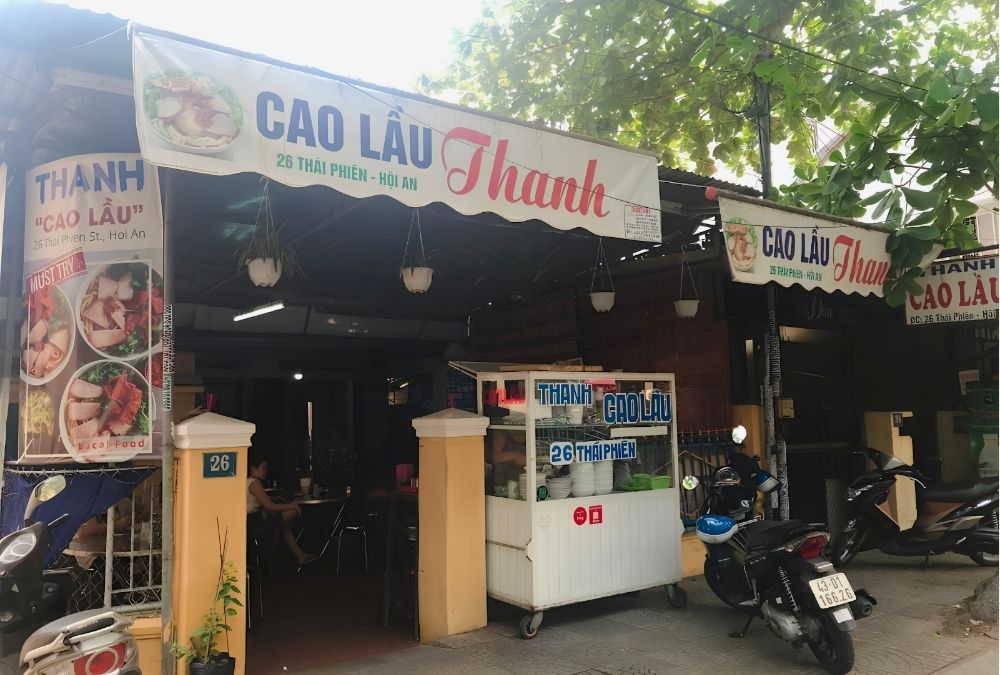
This is the best-known name on the list, and the first stop for anyone who asks locals where to eat Cao Lau. The restaurant has served the dish from the same spot for more than two decades, working from a courtyard of about 15 square metres in front of the owner’s home, with the kitchen at the front and one recipe for the pork that has never changed. Herbs arrive fresh from Tra Que each day, and the noodles come from a well-known workshop that makes them with water from the Ba Le well.
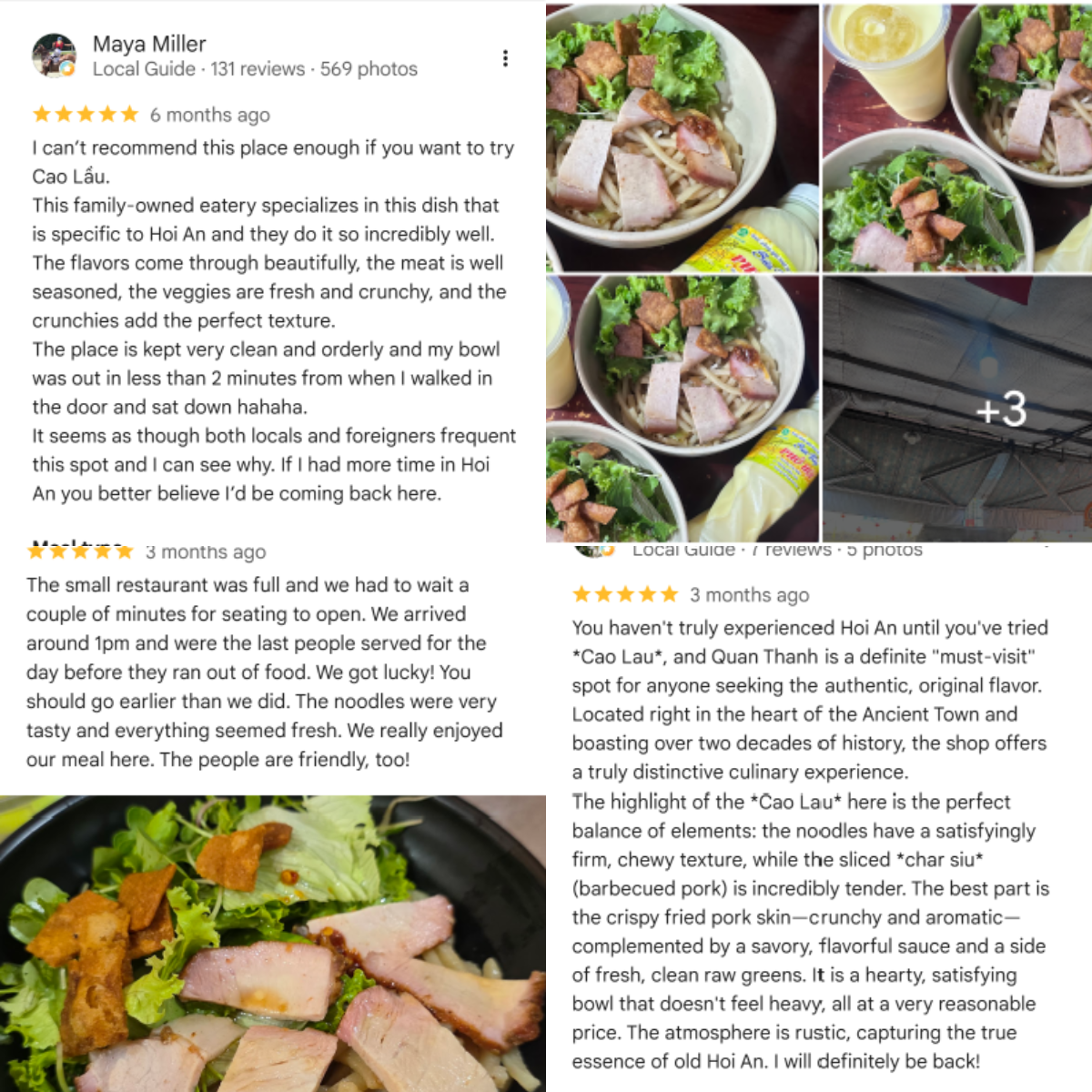
A small table is usually free within a couple of minutes, and a bowl reaches it almost as fast. First comes the smell: five-spice, soy and warm pork, drifting from the open kitchen at the front of the courtyard. Then the bowl itself: chewy noodles under crunchy lettuce and bean sprouts, fresh herbs with a peppery, bitter edge, and slices of char siu that are tender and sweetly caramelised, with a dark, salty-sweet sauce pooling at the bottom.
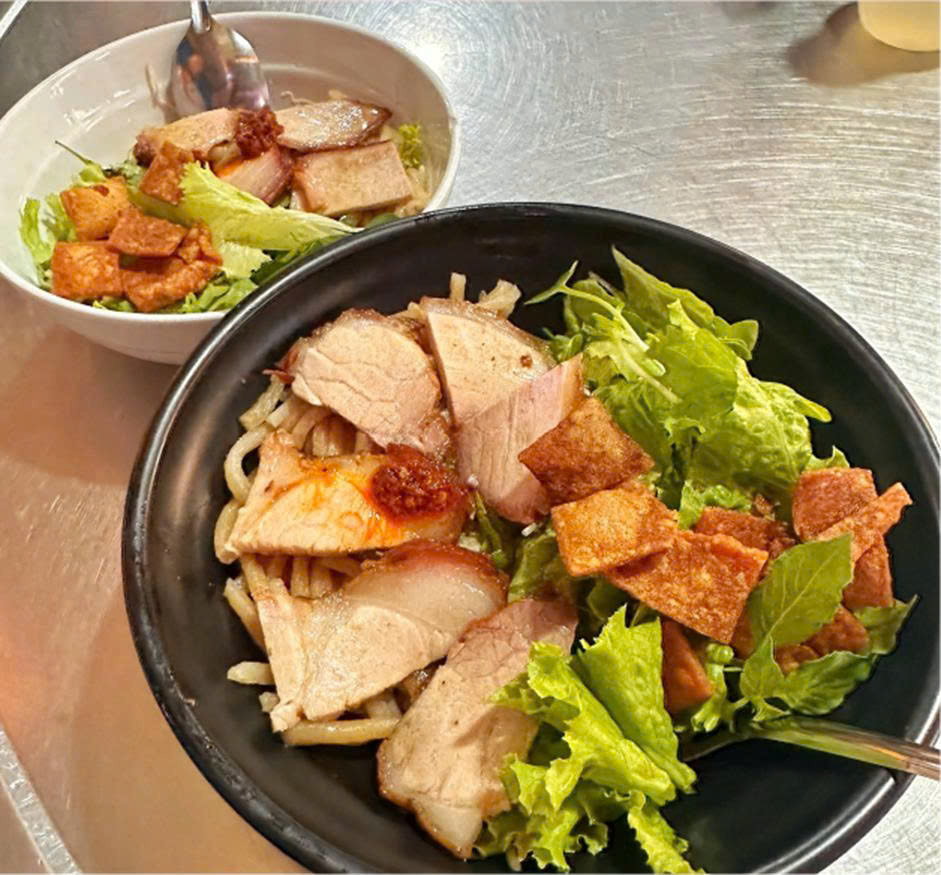
Crisp fried noodle squares crackle on top. Mixed together, the sauce coats every strand, and the aftertaste stays on the tongue long after the last mouthful. The bowl is neat, the place is clean and the service is quick, which suits a short lunch stop.
Go before noon. The restaurant is small, and the kitchen often sells out in the early afternoon, well before closing. A small bowl (35,000 VND) is enough for a light meal. Order a large (50,000 VND) if you skipped breakfast. Locals and foreign visitors sit side by side, so expect to share space at busy times.
Cao Lau Thuong
- Address: 79 Tran Cao Van, Hoi An
- Rating: 5.0★ (653 Google reviews)
- Hours: 10:30-21:30 daily
- Cost: about 30,000-50,000 VND per bowl
- Phone: +84 905 791 146
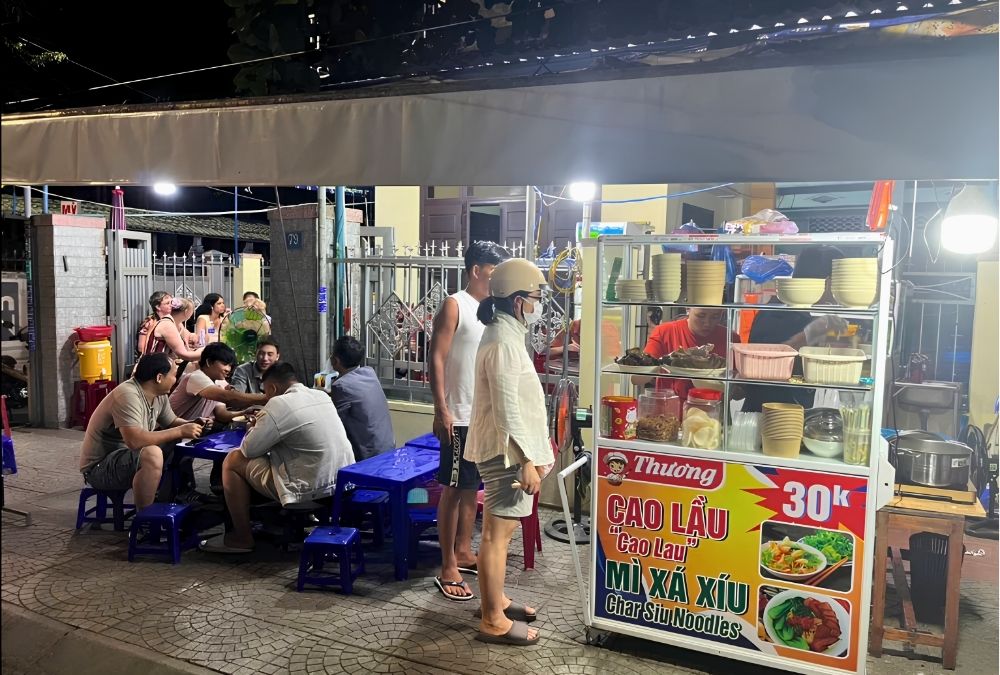
Cao Lau Thuong sits in a residential district away from the lantern streets, in the front room of a family house. The experience. Sitting down feels like visiting someone’s home. The open front gives a view straight into the living room, the tables are clean and comfortable, and a large tower fan keeps the air moving through the afternoon heat.
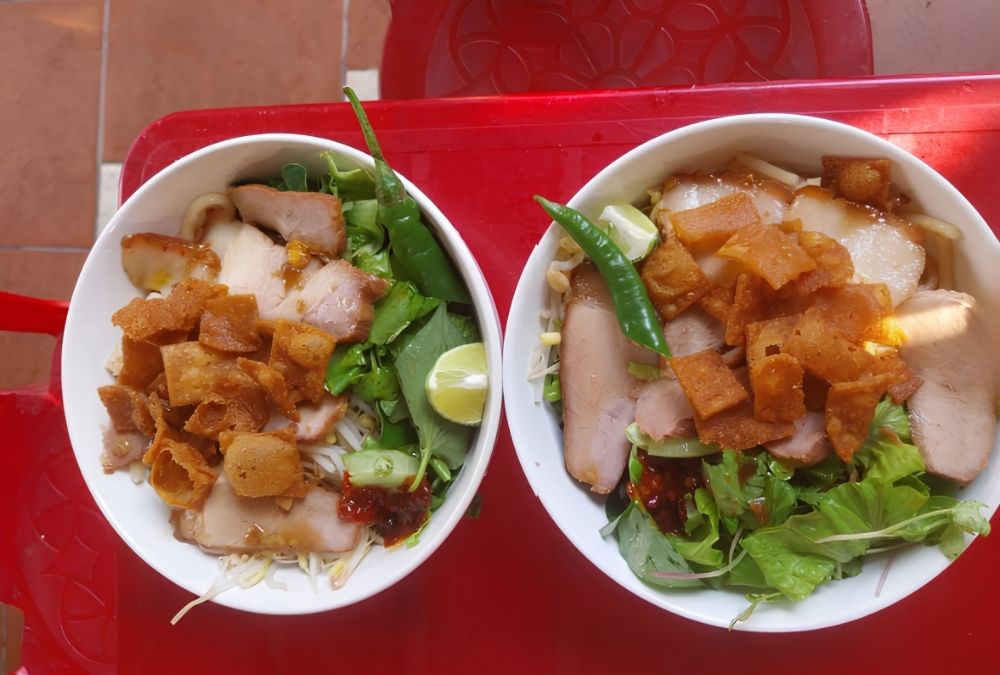
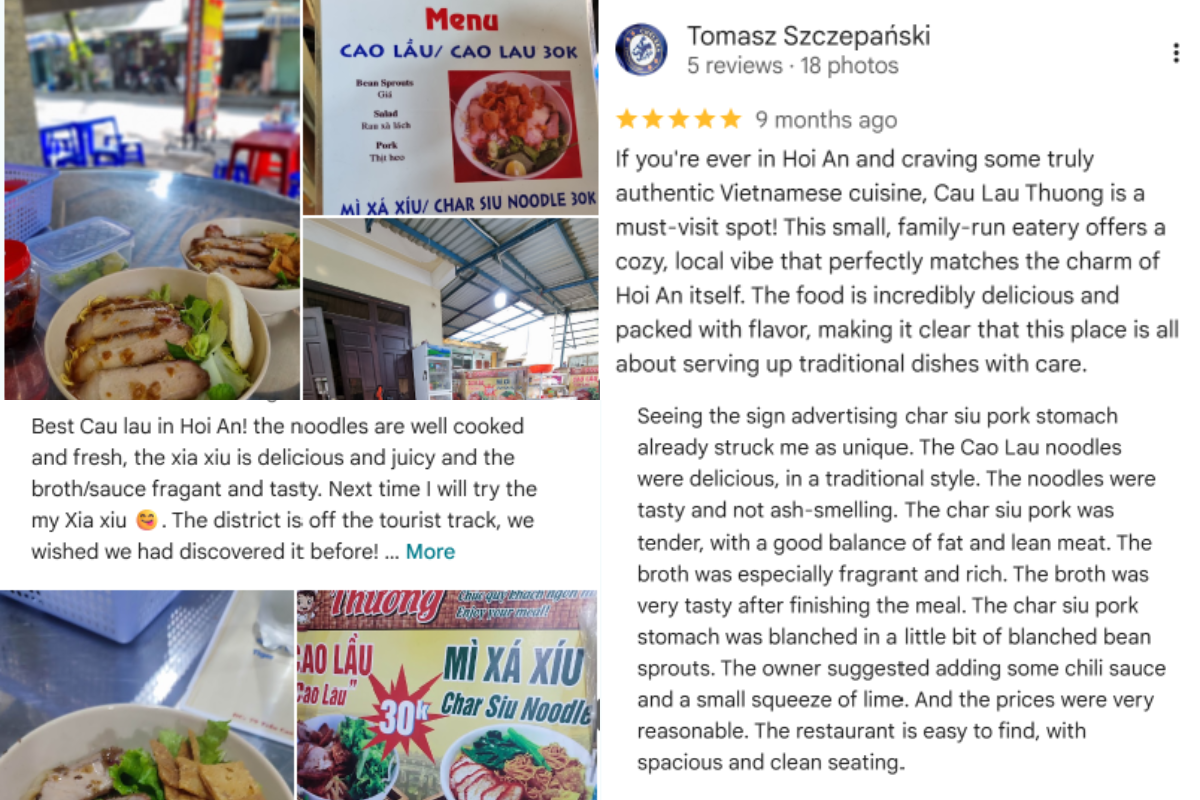
The bowl is simple and well made: slightly chewy noodles in a savoury, soy-based sauce, bean sprouts, fresh herbs, crunchy fried noodle squares and thin slices of fairly lean pork. A jar of homemade chilli sits on the table, and a spoonful stirred through the noodles adds a slow, rounded heat that suits the soy sauce. The char siu stays juicy, and the sauce is fragrant rather than heavy. A vegetarian Cao Lau is also on offer and is worth ordering if anyone in the group avoids pork.
The neighbourhood is quiet, so it is a good choice for a relaxed meal away from Old Town crowds. Prices are among the lowest in this guide, a full meal comes in under the cost of a coffee in the Old Town. Check opening times by phone if you plan to arrive at the very start or end of the day.
Cao Lau 94 Dao Duy Tu
- Address: 94 Dao Duy Tu, Hoi An
- Rating: 4.8★ (139 Google reviews)
- Hours: 08:00-21:00 daily
- Cost: about 40,000-60,000 VND (a Cao Lau and a can of beer comes to about 60,000 VND)
- Phone: +84 938 191 378
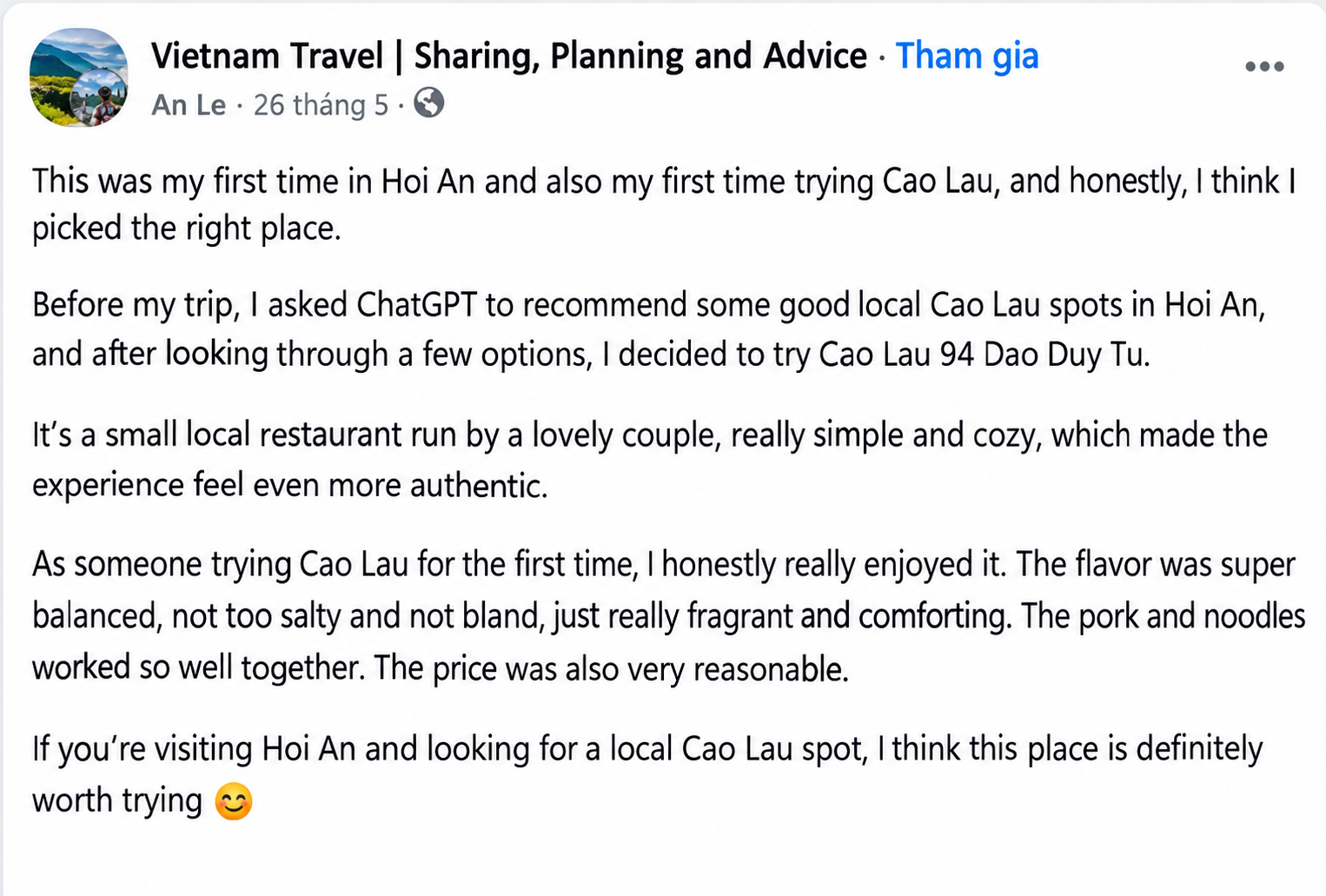
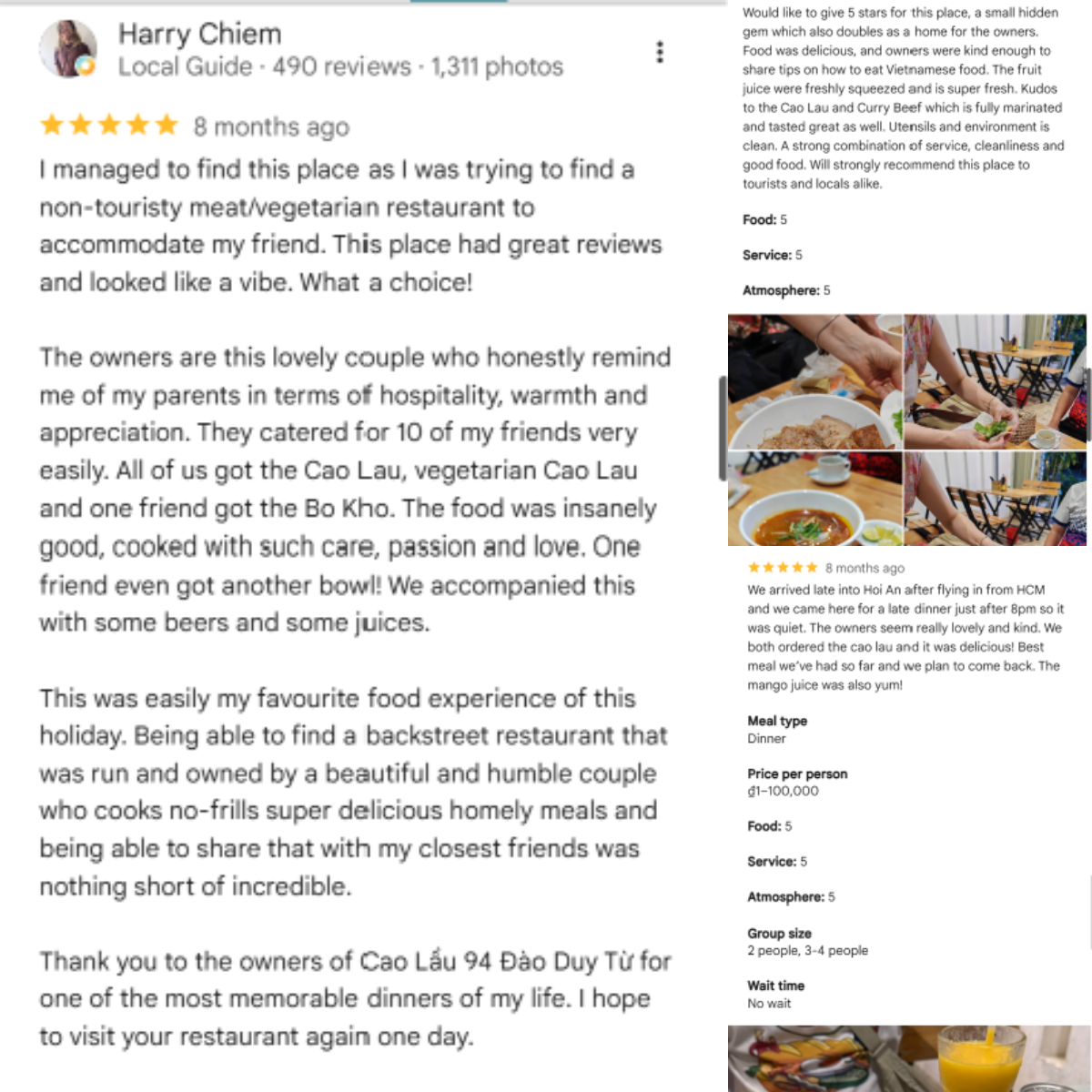
A small family restaurant run by a warm, welcoming couple, away from the busiest streets. It copes easily with groups: a table of ten has been served Cao Lau, vegetarian Cao Lau and bo kho (beef stew) without fuss.
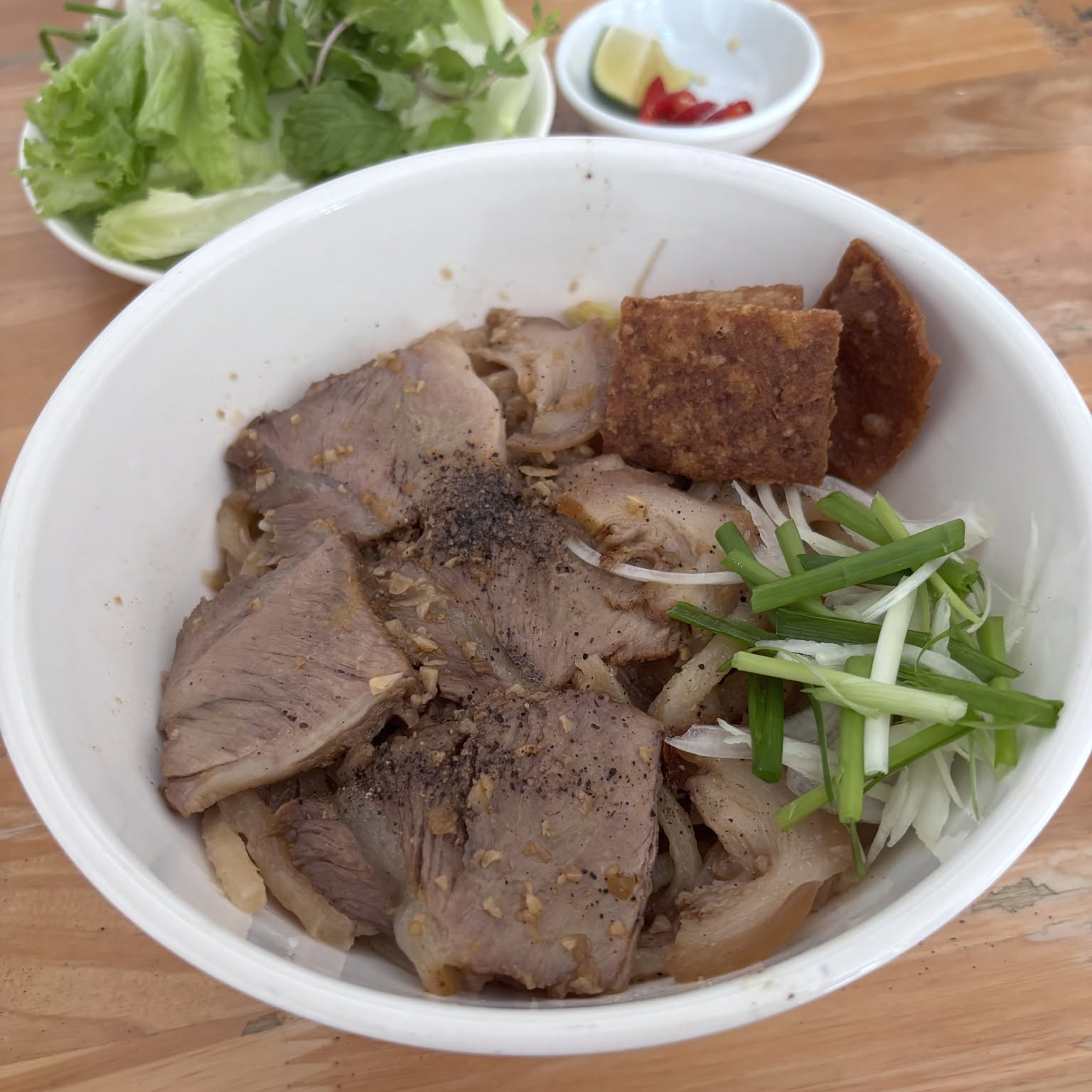
The welcome comes first: a smiling owner, a menu that grows on request (there is a second menu with more rice dishes), and a pace that never feels rushed. The Cao Lau has springy noodles, fresh greens and a house sauce, with pork that carries a deep, savoury flavour.
An Le, sharing his experience in the Vietnam Travel | Sharing, Planning and Advice group, also praised the restaurant after trying Cao Lau for the first time in Hoi An. He described the family-run spot as simple and cosy, highlighting the fragrant, well-balanced flavour of the noodles and pork. The reasonable price was another reason he considered it worth visiting.
The banh bao banh vac (white rose dumplings) arrive in a sweet-savoury sauce and are just as popular as the noodles, and a papaya salad on the side adds a sharp, crunchy contrast. A fan cools the room, though there is no air conditioning. It makes an easy late lunch or an unhurried dinner.
The restaurant sometimes closes for a gap in the middle of the afternoon, even though it is listed as open all day, so avoid arriving around 15:00-17:00. Vegetarian Cao Lau is available, which makes it a good option for mixed groups. A cold beer with the noodles keeps the total near 60,000 VND.
Cao Lau Ba Dinh
- Address: 138 Tran Phu, Old Town, Hoi An
- Rating: 4.9★ (148 Google reviews)
- Hours: 08:00-20:00 daily
- Cost: about 30,000-50,000 VND per bowl
- Phone: +84 905 636 001
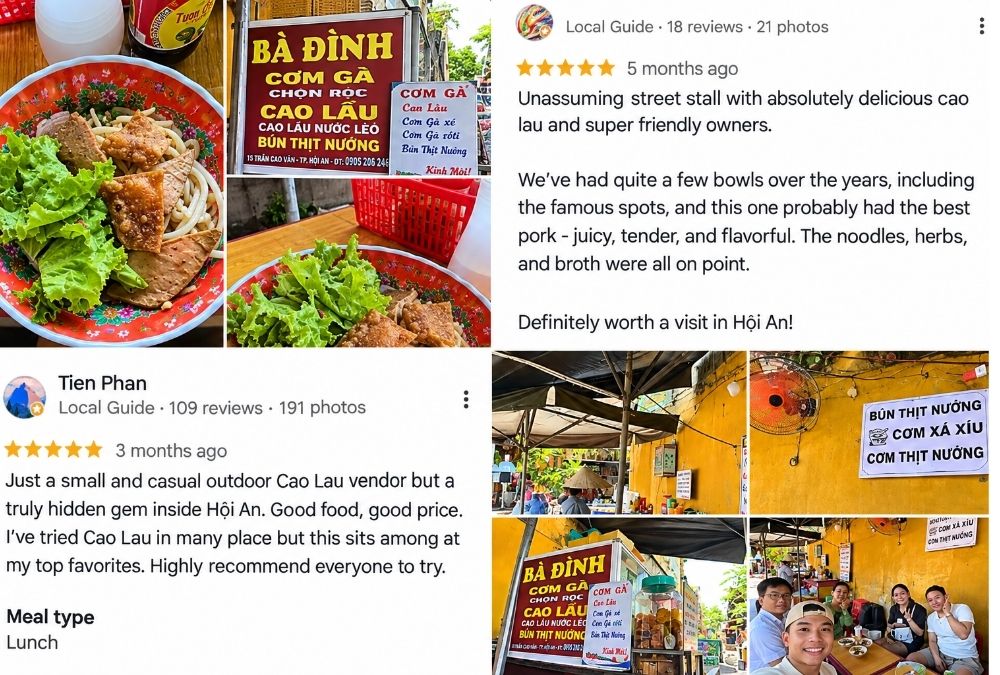
A small, casual outdoor stall on Tran Phu, the main street of the Old Town, and one of the few places on this street where the price stays at the local level. The setting is plain: a handful of tables on the pavement, the clatter of bowls, and passers-by drifting down one of the busiest streets in town.
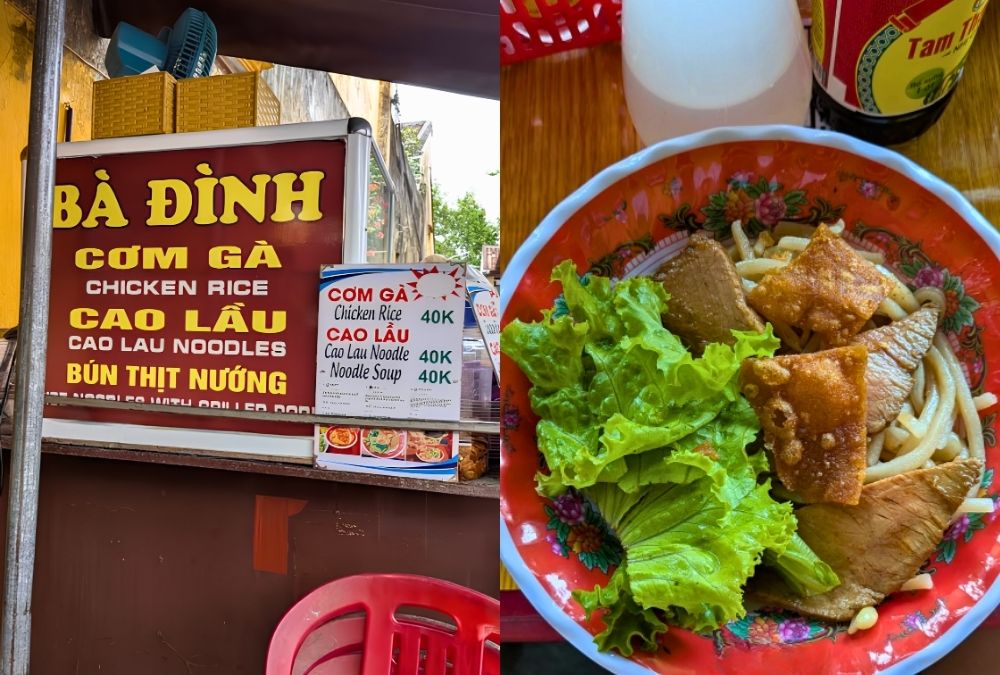
The owners welcome everyone alike, and first-timers are usually shown how to mix the bowl and eat it properly. The pork is the highlight: juicy, tender and well seasoned, with noodles, herbs and sauce in balance. The stall also serves chicken rice and a barbecue pork noodle dish, and a glass of kumquat-lemon iced tea cuts through the richness of the pork. It is easy to finish one bowl and want a second.
Tran Phu is the street where tourist-priced Cao Lau can reach 100,000-150,000 VND, so confirm the price of anything you order beyond the standard bowl. Come outside peak lunch and dinner hours for an easier seat on the pavement. It sits in the middle of the Old Town, so it works as a stop between sights.
Quan an Co Eo
- Address: 45/7 Tran Hung Dao, Hoi An
- Rating: 4.8★ (399 Google reviews)
- Hours: 10:30-22:00 daily
- Cost: dinner for two under about 200,000 VN
- Phone: +84 876 973 329
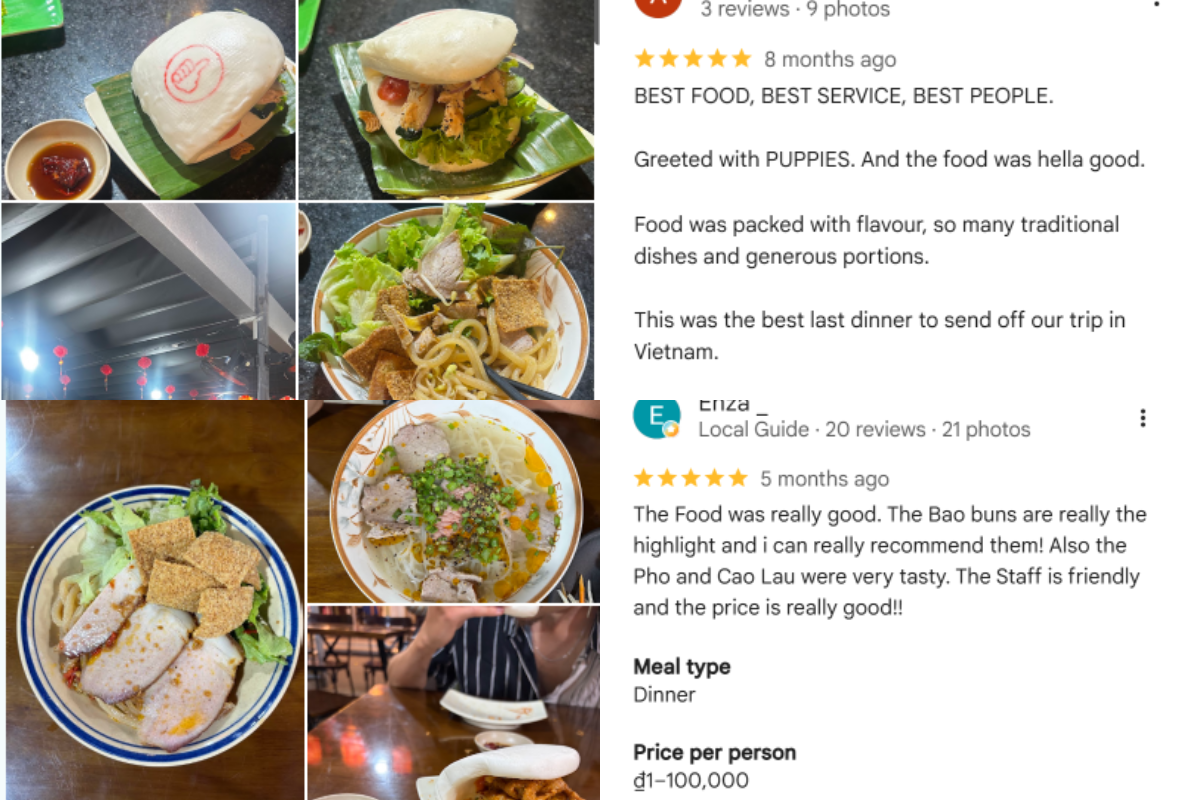
Co Eo is less of a Cao Lau specialist than the other four, which is part of its appeal: a family restaurant run by a couple, with a wide menu of traditional dishes. Cao Lau and banh xeo (crispy pancakes) are the favourites, alongside pho and the steamed banh bao buns, which many diners name as the highlight.
The place is clean, relaxed and often shared with a few friendly puppies. Plates come out with generous portions and plenty of flavour, in the style locals eat rather than a version adapted for tourists. The owners speak little English, but they explain dishes by gesture, and first-timers are shown how to wrap and dip the banh xeo. The Cao Lau is tasty and the prices stay well below what the same meal would cost in the Old Town, which makes it an easy choice for a last dinner in Hoi An.
It stays open until 22:00, so it works when most dedicated Cao Lau shops have closed. Order several dishes to share: Cao Lau, banh xeo and the bao buns make a balanced table. Bring a translation app for details, since the owners explain by gesture rather than English.
Read more: Hoi An Street Food Tour
How to spot a good bowl of Cao Lau (and a bad one)
| Good signs | Warning signs |
| Noodles with a springy chew and a slightly hollow centre, not hard or dry | A watery, soup-like broth |
| Pork with a dark, glossy, savoury glaze | A menu that mixes Cao Lau, banh mi, pizza and fried rice |
| A small amount of thick, dark sauce at the bottom of the bowl | Pre-sliced pork that looks reheated |
| Crisp fried noodle squares made from the same dough | Prices well above the local range |
| Fresh herbs: mustard greens, tan o, bitter herb, lettuce and sprouts | Wilted herbs, limp fried crackers or noodles that clump together |
Cao Lau prices in Hoi An: What a fair bowl costs
| Where | Typical price per bowl |
| Traditional local shop | about 35,000-50,000 VND |
| Tourist-facing sit-down restaurant | about 70,000-90,000 VND |
| Old Town “trap zone” | about 100,000-150,000 VND |
Prices at local shops have barely moved in years, and the cheapest bowls are usually the good ones.
When to eat Cao Lau in Hoi An
Locals eat Cao Lau at lunch. Many dedicated shops open early, do most of their trade until early afternoon and close when they sell out, so for the most popular names plan to arrive before noon. For a late meal, restaurants open into the evening, such as Co Eo and Cao Lau Thương, are the safer bets.
A cool yogurt drink (sua chua) is the classic local pairing because it cuts the richness of the pork, and iced lemon or kumquat tea is a common alternative.
A good bowl of Cao Lau is worth seeking out beyond Hoi An’s busiest streets. Whether you choose a long-established local eatery or a small family-run kitchen, pay attention to the chewy noodles, caramelised pork, crisp crackers and fresh herbs that give the dish its distinctive character. Order it freshly prepared, mix the ingredients together before eating, and enjoy it at an unhurried pace. In Hoi An, the most memorable Cao Lau often comes from the simplest places, where the recipe speaks for itself.