




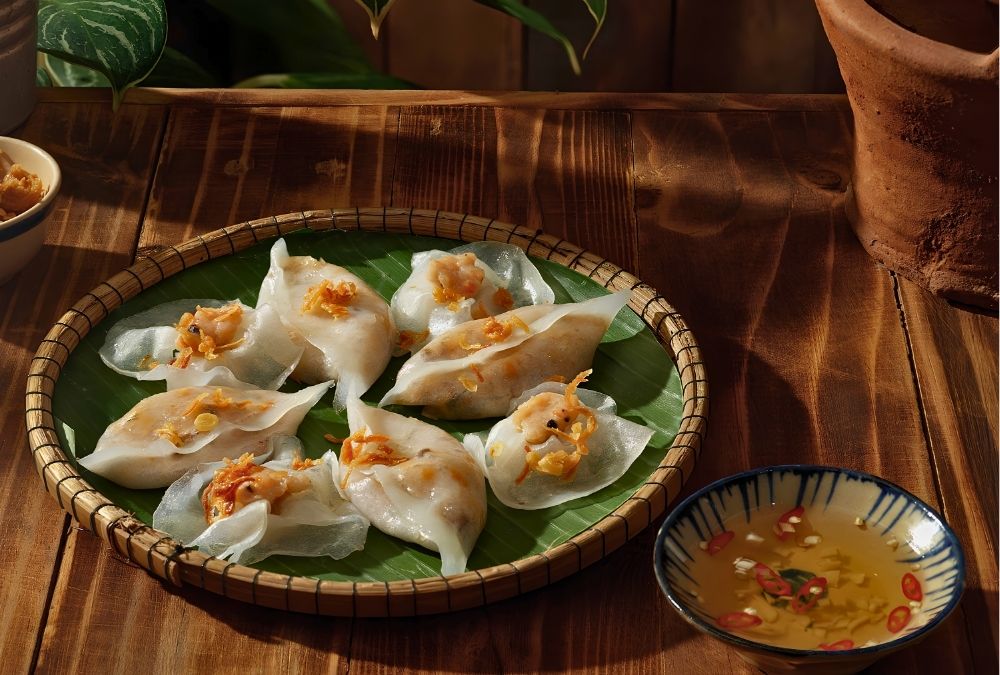
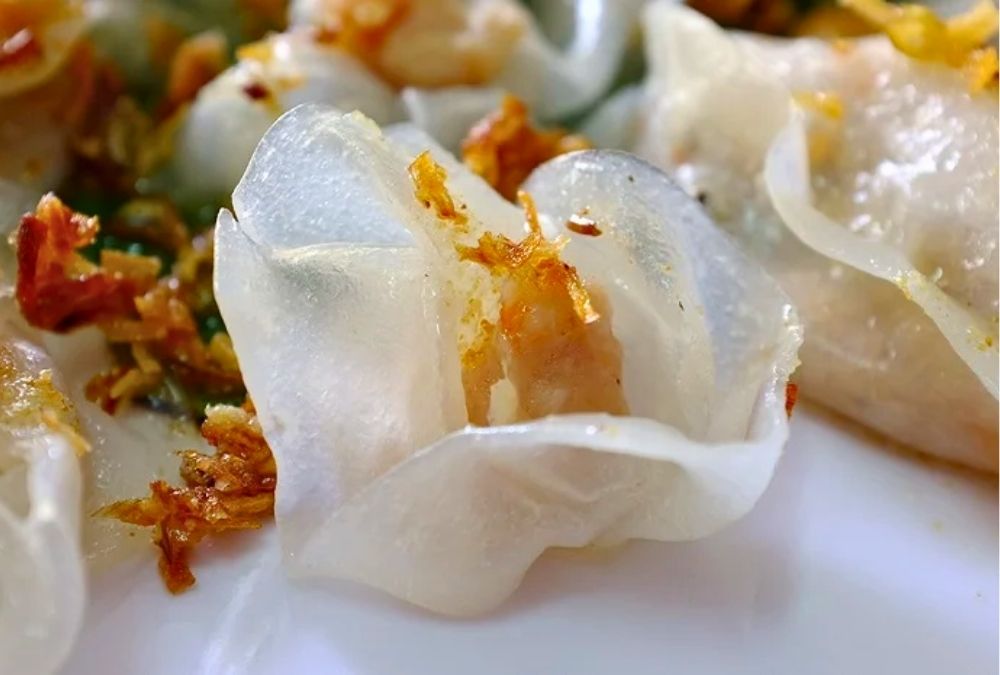
Set a plate of white rose dumplings on a table in Hoi An and the first reaction is hesitation. They look too delicate to eat: pale, translucent petals folded around a pink centre, scattered with golden shallots, glistening with a spoonful of peanut oil. Then the steam rises, the chilli fish sauce arrives, and the hesitation turns into a second plate.
This is banh bao Banh vac, the dish that exists only in Hoi An. This guide covers where the name came from, who made the first plate, how the dumplings are shaped, what travellers say, and where to eat them now.
White Rose Dumplings at a glance
| Question | Answer |
| Vietnamese name | Banh bao Banh vac (two dumplings served together) |
| English name | “White rose,” given by a Hoi An cafe owner for foreign guests |
| Main ingredient | Rice flour, filtered many times, with shrimp and pork filling |
| Age of the dish | More than a century, according to the family that makes it |
| Where it is made | Only in Hoi An |
| Typical price | About 70,000 VND per plate |
| Best-known maker | White Rose Restaurant, 533 Hai Ba Trung |
| Steaming time | Roughly 5 to 15 minutes, depending on size |
| Who it suits | Anyone who eats shrimp and pork (not a vegetarian dish) |
What are White Rose Dumplings?
The “white rose” is really two dumplings sharing one plate. Banh bao is the round one, small, with its edges flared like the petals of a rose, filled with finely pounded shrimp seasoned with pepper and spring onion. Banh vac is the larger, crescent-shaped one, filled with a stir-fried mix of shrimp, pork, wood ear mushroom, bean sprouts and scallion, with bamboo shoots added in season. The name comes from its shape, which resembles the handle of a cooking pot.
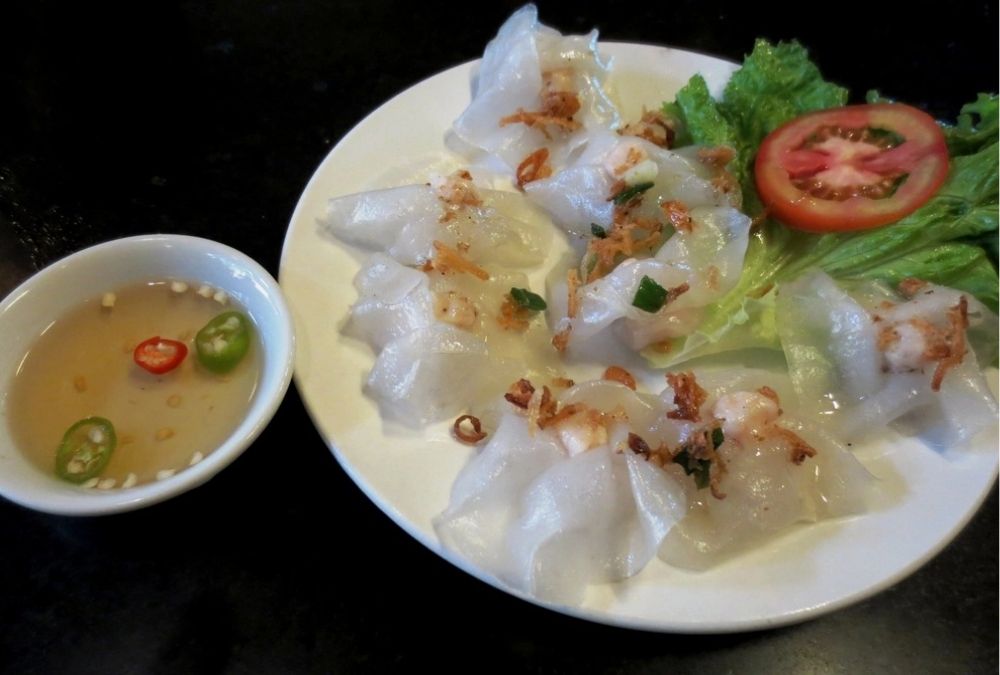
On the plate, the banh bao usually sits in the centre and the Banh vac are arranged around it, so the whole dish reads as a single blooming flower. Both are made from rice flour rather than wheat, which is why the skin turns translucent when steamed.
How the name “White Rose” was born
Locals simply called the dish banh bao Banh vac. The English name came from a cafe owner trying to explain it to foreign guests.
Nguyen Manh Kim, who ran Cafe Des Amis on the riverfront, was the first person in Hoi An to introduce the dumplings to foreign visitors. In the early days of tourism he bought them from a family kiln and carried them back to his tables, and the guests praised them and asked for the name. He had no translation. Looking at the plate, the shape reminded him of a white rose, and he said so. The name stuck. He remembers one guest who stayed four days in Hoi An and ordered the dish at four meals.
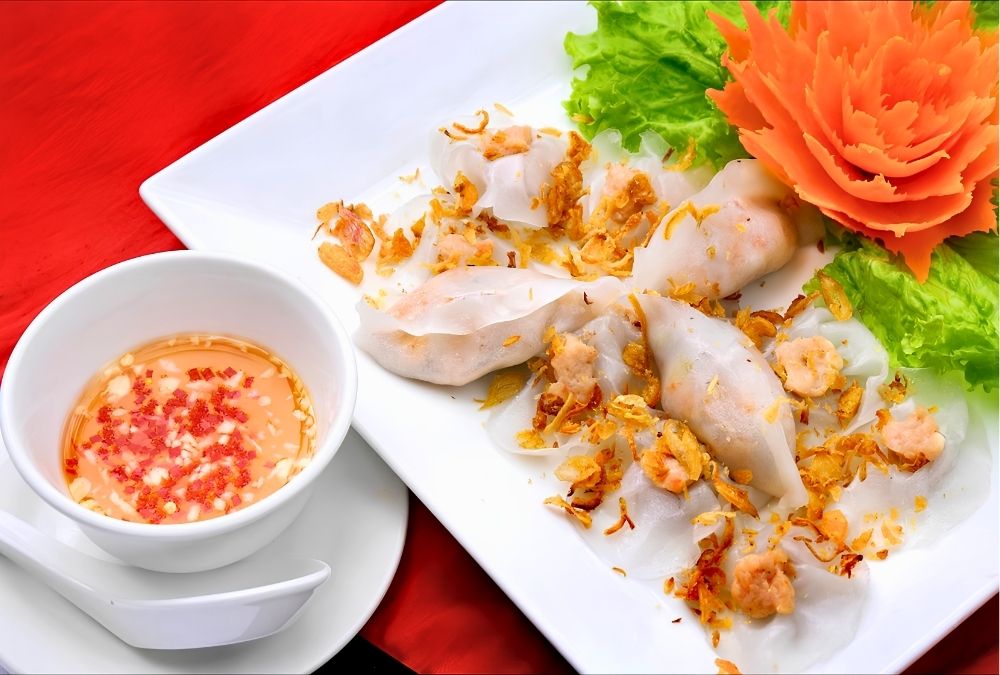
He also remembers a small regret. The original banh bao stood upright, like the old drawstring cloth purse it was named after. Over the years the shape grew lower and wider, the way a rose opens, and that is the form visitors know today.
A family Secret From 38 Le Loi
The story of Hoi An’s white rose dumplings begins in the mid-20th century with Pham Thi Dien, a skilled cook from the respected Pham family. After marrying silk trader Trinh Trieu Tam, she lived at 38 Le Loi, where the couple developed two delicate dumplings for family ancestral feasts. Drawing on Chinese steaming techniques, Dien replaced wheat flour with finely ground rice and used local shrimp and pork to create banh bao and banh vac. The recipe gradually became a distinctive part of Hoi An’s culinary heritage. (Source: Hoi An Heritage)
For years, the dumplings remained a family specialty rather than a commercial product. Their daughter, Trinh Thi Hue, eventually began selling them, making just two steamers a day, each containing slightly fewer than a hundred dumplings. She deliberately limited production, believing that making too much would diminish their value. This careful approach reflected a traditional Hoi An attitude towards work, quality and family life.
In the third generation, Tran Tuan Ngai brought the family craft to a wider audience as tourism grew. He supplied banh bao and banh vac to restaurants throughout the Old Town before opening his own shop at 533 Hai Ba Trung in 2000. Today, the dumplings served at many local restaurants can be traced back to this family’s kitchen. The recipe remains closely guarded, passed down through generations rather than adapted for mass production.
Accounts of the dumplings’ origins differ: some credit Dien with creating them in the mid-20th century, while others trace the family recipe further back to earlier generations or Chinese culinary traditions. What remains consistent is the importance of finely processed rice, painstaking hand-shaping and family knowledge. These qualities have helped bánh bao bánh vạc retain its distinctive place in Hoi An’s food culture.
Read more: Hoi An Street Food Tour
How White Rose Dumplings are made
The skill lies in the flour, not the filling:
- The flour: Fragrant sticky rice is soaked for half a day, ground, then repeatedly rinsed and settled 10-20 times until the water runs clear. This process gives the dough its signature elasticity and translucency. The flour is then drained, pressed to remove excess moisture, and kneaded until it can be stretched into a thin, almost transparent sheet. Traditionally, water from Hoi An’s ancient Ba Le well is prized for its quality.
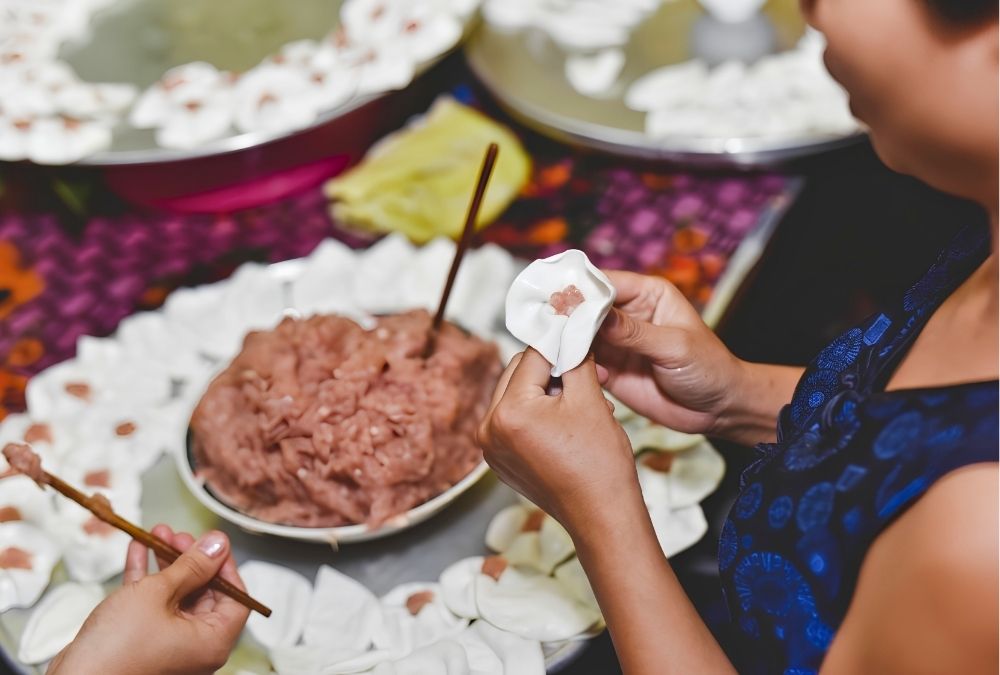
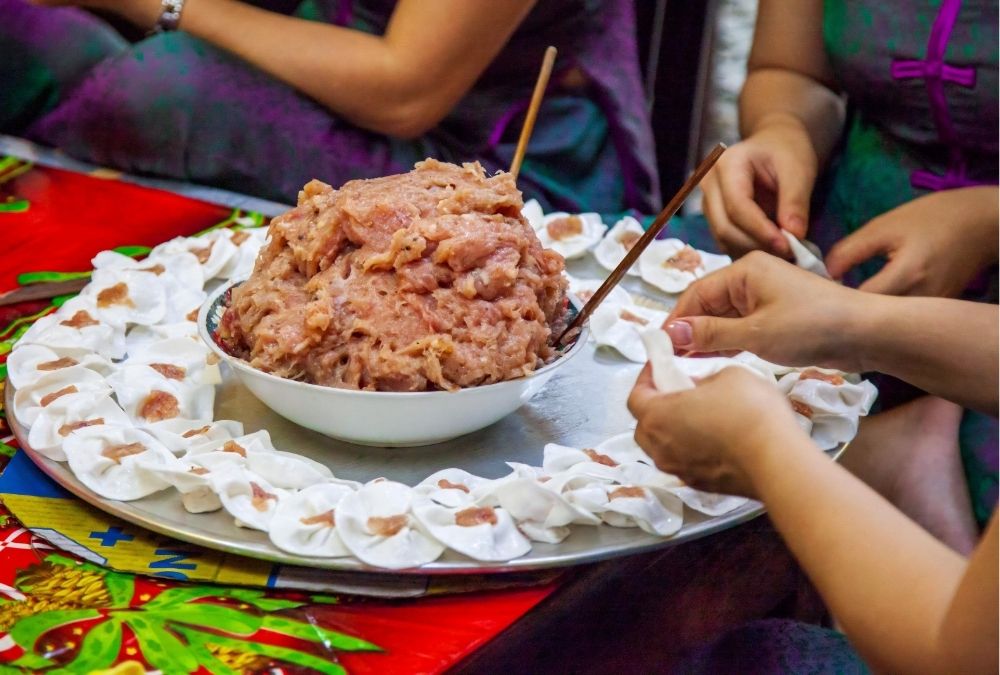
- The shaping: The dough is rolled into long ropes and pinched into small pieces. With oil rubbed on both hands, the maker flattens each piece with a circular press of the thumb, thinning it into a wrapper the shape of a petal, then presses a hollow in the centre.
- The filling: For banh bao, shrimp are pounded to a paste with pepper, onion and salt. For Banh vac, shrimp and minced pork are stir-fried with wood ear mushroom, bean sprouts and scallion, and sometimes shiitake or bamboo shoots. Some modern kitchens roll the filling raw into balls and coat them in a thin layer of arrowroot starch, so the filling stays neat and turns clear after steaming.
- The folding: The wrapper is cupped, the filling set in the middle, and the edges pinched in tiny crimps so the dumpling opens like a rose. The Banh vac is folded closed along one side.
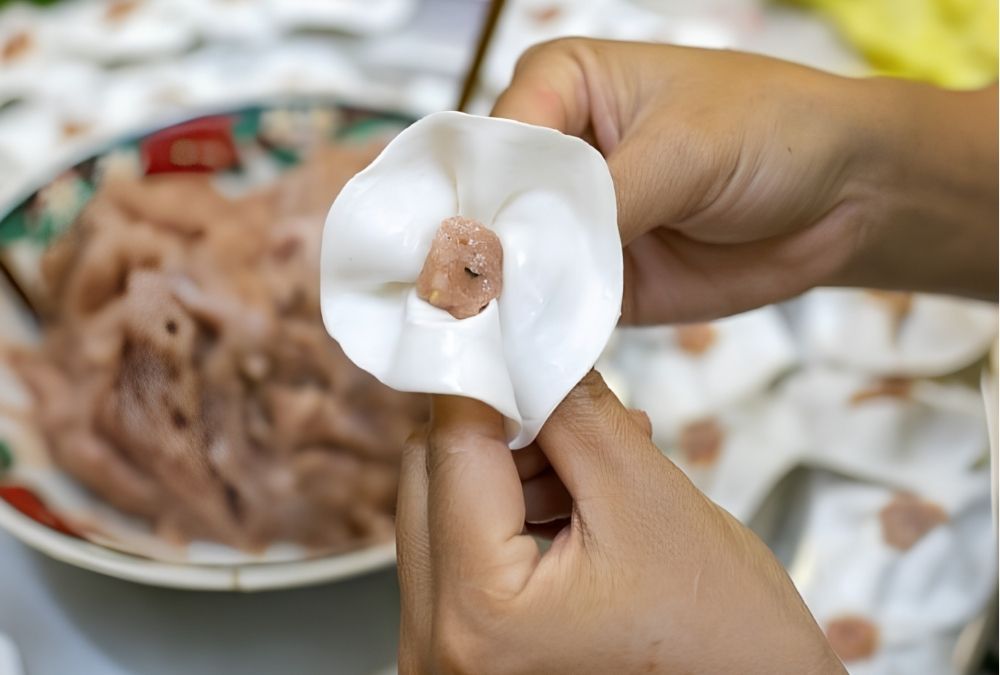
- The steaming: The dumplings go into a steamer for roughly five to fifteen minutes, depending on size. They are ready when the skin turns clear. Steaming too long makes them lose their shape.
- The finish: On a plate lined with a green banana leaf, the dumplings are arranged and scattered with crisp fried shallots, a spoonful of fragrant peanut oil poured over them. The dipping sauce is a balanced fish sauce with sliced fresh chilli, and in the old recipe it is made sweeter with the cooking water from boiled shrimp.
What White Rose Dumplings taste like
The first thing the mouth notices is texture. The skin is thin, slightly chewy, a little springy, soft rather than mushy, with a faint sweet aroma of rice. Then the filling: the shrimp in banh bao is sweet and nutty, almost creamy, while the pork and wood ear in Banh vac add a mild peppery savouriness and a little crunch. The fried shallots bring a toasty crispness and a hint of caramel sweetness, and the peanut oil makes everything glossy and fragrant.
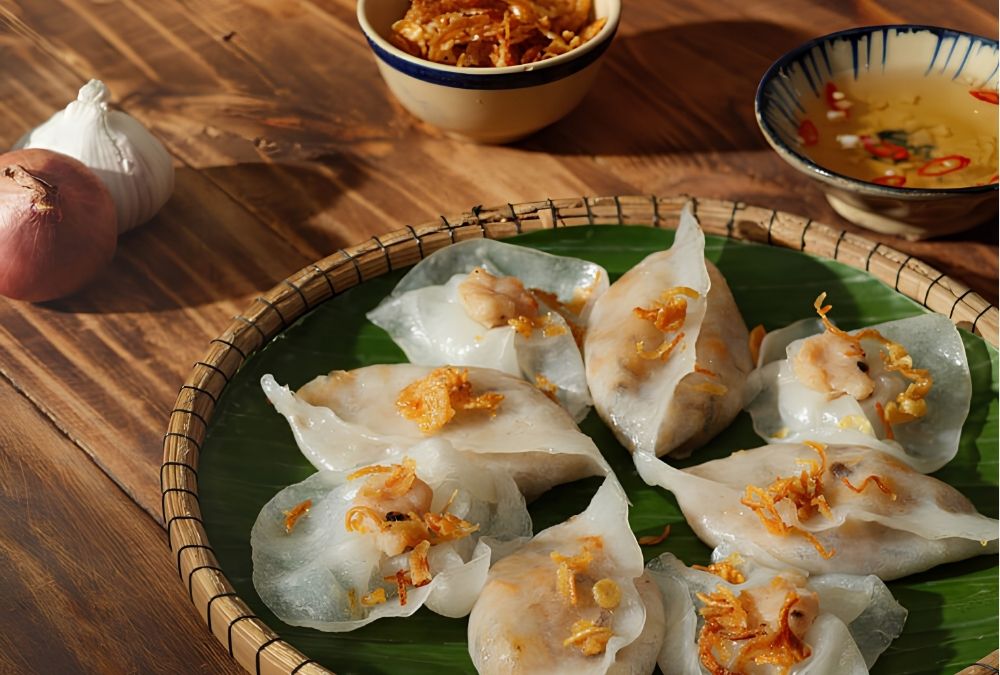
Then the dip. A little fish sauce, a thin slice of chilli, a touch of sugar and lime: sour, salty, sweet and hot at once, it lifts the delicate flavour of the rice and shrimp without covering it. Dumplings in Hoi An are often followed by a glass of hot soy-bean tea, served after the plate is cleared, which is part of the proper end to the meal.
A dumpling in a different part of the country can be heavy, as big as a fist and filled with egg and meat, enough to last a morning. The white rose is the opposite: light, refined, almost poetic, and easy to eat three plates of.
What visitors say about White Rose Dumplings
The dish has a way of winning over people who did not expect to love it. Chris and Shayna Dufresne, Canadian travel YouTubers who document their trips as a family of four, visited a family-run dumpling house on Hai Ba Trung in 2025. They were greeted by a group of women shaping thin wrappers by hand, and they declared that cao lau and white rose together were reason enough to come back to Hoi An again and again.
When the plate arrived, Chris called it “absolutely incredible.” They described the pork as tender and gently peppery, and the skin as chewy yet soft, never mushy. Shayna compared the texture to pierogi. Dipped in fish sauce, they said, it was even more memorable.
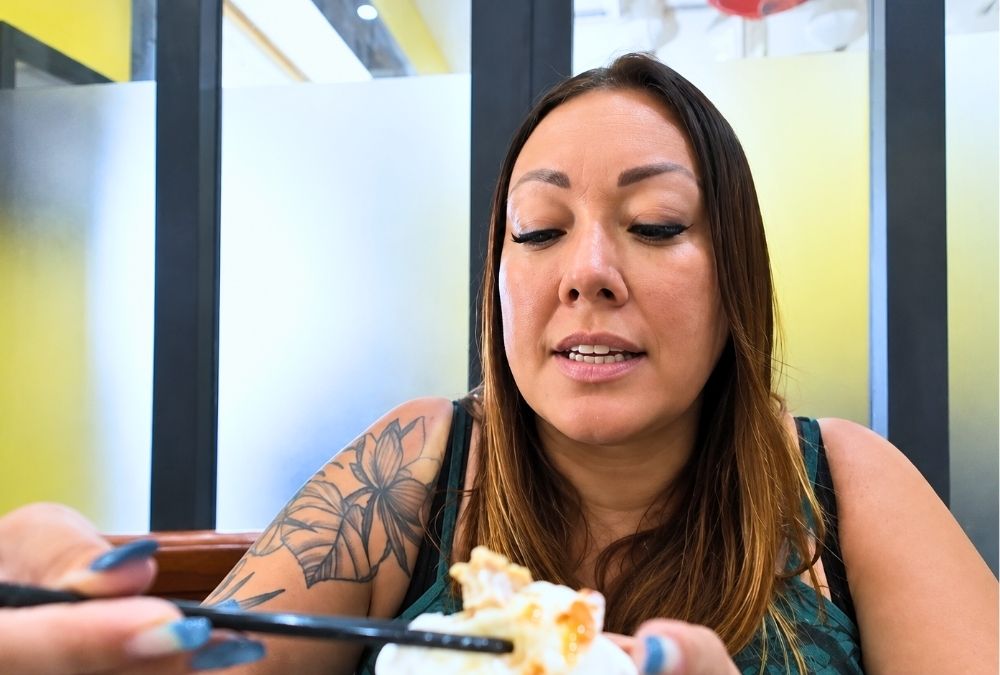
Across reviews, visitors repeatedly praise the dumplings’ delicate texture, distinctive flavour and handmade preparation. Many also enjoy watching the staff shape each piece, while the simple menu and reasonable prices add to the appeal.
- Lori M, from California, wrote in a personal discussion on Tripadvisor’s Vietnam Forum in February 2024 that the dumplings were fantastic and offered great value for money. She also praised the chance to watch the women making them by hand and described the staff as lovely.
- Another reviewer who ate there in December 2023 liked that the menu sticks to the dumplings alone, calling it a simple dish done well and a must-stop in Hoi An.
- A reviewer who goes by saradD4330KO wrote in December 2023 that they ate two plates by themselves and that the dish was unique in the world.
- A visitor from a food tour went back the next day, and described the restaurant as full of history and secret recipes, and the experience of watching the staff shape the dumplings as great.
- Nicole C, from Galway, called the dumplings very tasty, and another traveller described the white rose as a chewy, clear dumpling made only in Hoi An that goes very well with the dipping sauce.
Read more: Hoi An City Tour, Boat Ride & Flower Lantern Release
Where to eat White Rose Dumplings in Hoi An
White Rose Restaurant (the family dumpling house)
- Address: 533 Hai Ba Trung, Hoi An
- Rating: 4.3★ (2,591 Google reviews), 4.1★ (about 490 TripAdvisor reviews)
- Hours: 07:30-20:30 daily
- Cost: about 70,000 VND per plate of white rose dumplings
- Phone: +84 799 000 700
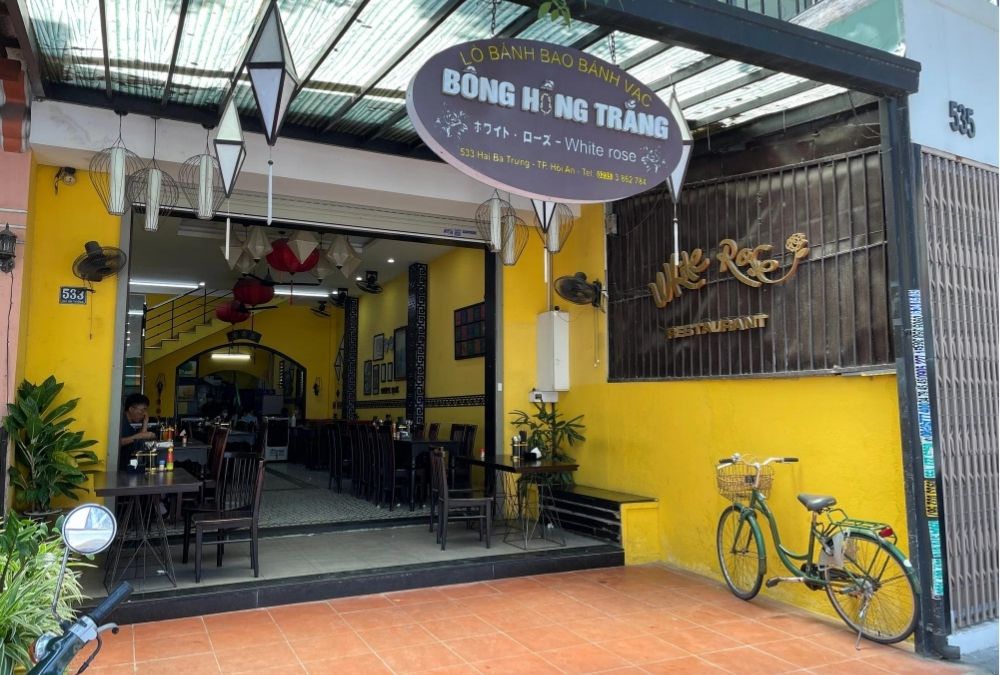
On TripAdvisor, White Rose Restaurant holds 4.1 out of 5 from nearly 490 reviews, ranked in the upper tier of Hoi An restaurants and carrying a Travellers’ Choice award. The restaurant opened by Tran Tuan Ngai’s family is the best place to see the craft. Women sit at the rear shaping wrappers by hand, and guests can watch, and try wrapping a few themselves. The menu is short: the steamed white rose dumplings and a crisp fried wonton topped with fresh vegetables and a tomato-based topping, nicknamed the Hoi An “pizza” Reviewers suggest ordering two plates of the white rose.
The dumplings are made to order, so a plate takes about ten minutes. A plate of Vietnamese “pizza” comes in six pieces, and you can ask for four if that is too much. Arrive mid-morning or mid-afternoon to avoid the lunch rush.
Morning Glory Original
- Address: 106 Nguyen Thai Hoc, Old Town
- Rating: 4.3★ (8,146 Google reviews)
- Hours: 11:00-22:00 daily
- Cost: mid-range
- Phone: +84 235 2241 556
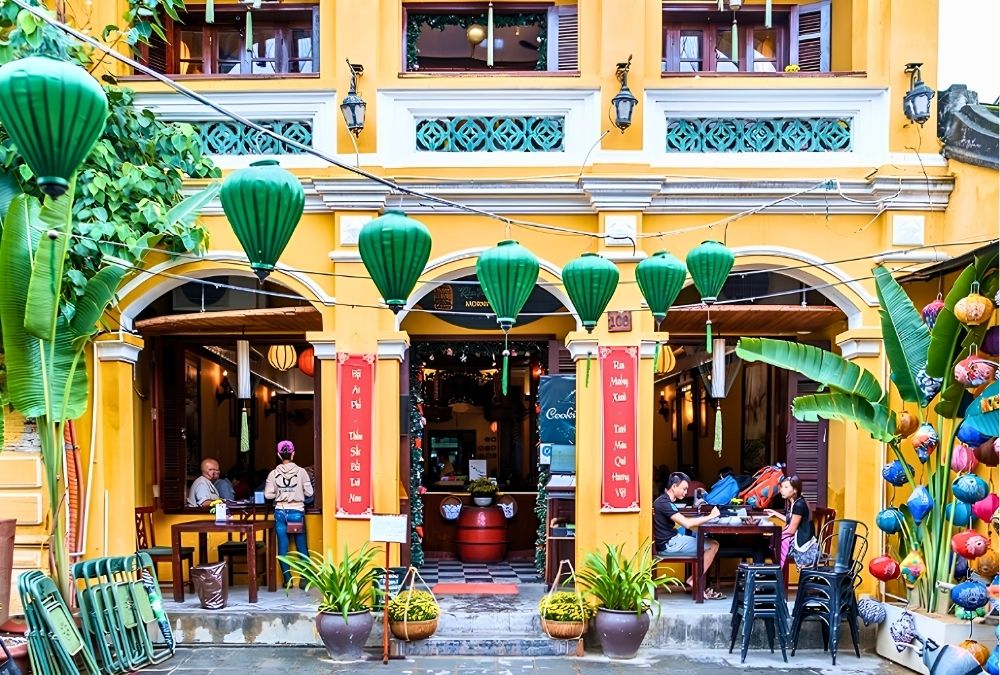
Set in a restored old house in Hoi An’s Old Town, Morning Glory Original serves local specialties, including white rose dumplings, cao lau and banh xeo. The dumplings have their own following: one diner who had tried them at several places, including the original shop, said they preferred the version here. Despite the restaurant’s busy atmosphere, the reviewer also praised the prompt service.
Cao Lau 94 Dao Duy Tu
- Address: 94 Dao Duy Tu, Hoi An
- Rating: 4.8★ (140 Google reviews)
- Hours: 08:00-21:00 daily
- Cost: inexpensive
- Phone: +84 938 191 378
A small family restaurant run by a couple, away from the busiest streets, serving cao lau and white rose dumplings with a papaya salad. On Nhi Trung Street, many households here make dumplings by hand and supply restaurants across the Old Town, so a plate eaten fresh out of the steamer in this street is said to be among the best in town.
Dietary notes: Who can eat White Rose Dumplings?
A short list worth reading before you order.
- Shellfish: Both dumplings contain shrimp.
- Pork: The Banh vac filling contains minced pork. One pescatarian visitor reported that even the prawn dumplings contained pork fat, which was not stated on the menu, so travellers who avoid pork should ask directly.
- Vegetarians and vegans: The dish is built around shrimp and pork, so there is no standard vegetarian version.
- Allergies: If you have a shellfish, peanut or fish-sauce allergy, tell the staff before ordering, since the dumplings are finished with peanut oil and a fish-sauce dip.
How to eat White Rose Dumplings
- Eat them hot: The skin is at its best straight from the steamer, translucent and soft.
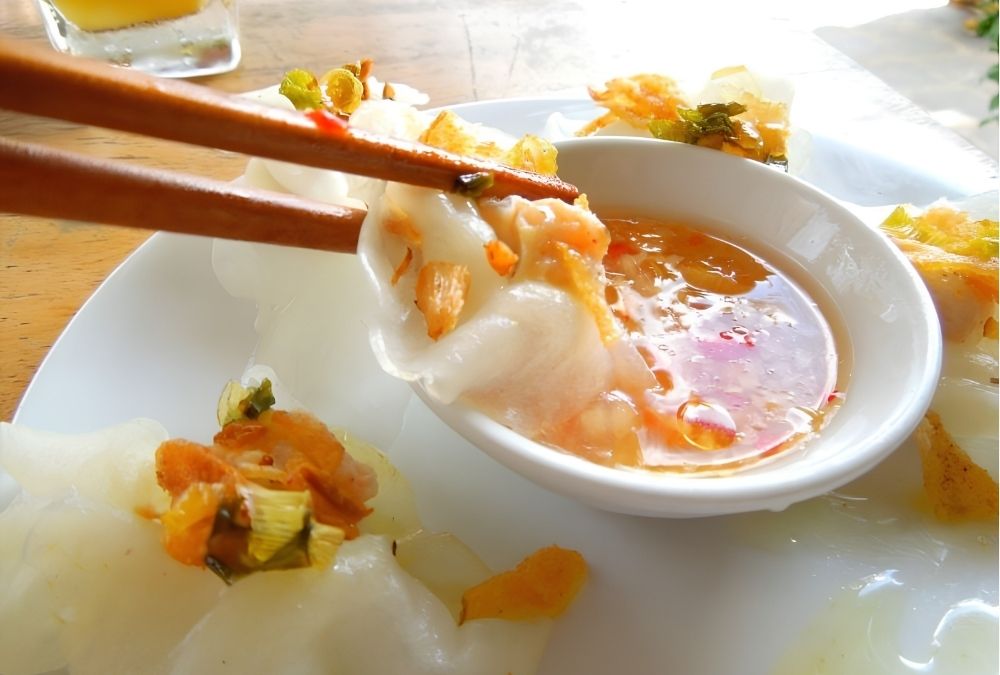
- Lift gently: The wrapper is thin. Use chopsticks or a fork, slide beneath the dumpling and lift rather than pinching the top.
- Dip lightly: A little sauce is enough. The aim is to lift the shrimp’s sweetness, not drown it.
- Take it in two bites: Cut or bite the dumpling in half, so the filling and the shallots arrive together.
- Mix the textures: Try a banh bao and a Banh vac one after the other to taste the difference between pounded shrimp and the mixed filling.
- Order more than one plate: A single plate is a small snack, and many visitors end up ordering a second.
- Finish with warm tea: In traditional style, a glass of hot soy-bean tea closes the meal.
A few kitchens let visitors watch the shaping process, and the family dumpling house on Hai Bà Trưng invites guests to try wrapping the dumplings themselves. One cycling food-tour visitor also wrote of a cooking class where they learned to make dumplings, including the white rose ones. For a longer hands-on session, a Hoi An cooking class is the best bet, although the dumpling skin takes years to master.
White rose dumplings are one of the few dishes in Vietnam that tell the story of a place in a single bite. Order a plate, lift one petal with your chopsticks, dip it lightly, and eat it while it is still warm. Then, as many visitors do, order a second.
FAQs
What are White Rose Dumplings in Hoi An?
White Rose Dumplings, or banh bao banh vac, are two types of steamed rice dumplings filled with shrimp, pork and vegetables, shaped like white flower petals.
Why are White Rose Dumplings called White Rose?
The name is attributed to Nguyen Manh Kim, former owner of Cafe Des Amis, who named the dumplings after their resemblance to white roses.
Where can you eat White Rose Dumplings in Hoi An?
White Rose Restaurant at 533 Hai Ba Trung is the best-known place to try the family-made dumplings.
How much do White Rose Dumplings cost?
A plate typically costs around 70,000 VND, depending on the restaurant and portion size.
Are White Rose Dumplings suitable for vegetarians?
No. Traditional recipes contain shrimp, and banh vac also includes pork. Ask the restaurant about ingredients if you have dietary restrictions.