




Every plate of chicken rice in Hoi An comes with a small mound of green on the side. A few sprigs of mint, a leaf of perilla, a stalk of rau ram, some crisp lettuce. They arrive almost unnoticed, yet remove them and the dish flattens into something merely pleasant. Those leaves have a home address, a few kilometres northeast of the Old Town, in a village of narrow beds and river-fed soil called Tra Que.
- Where Tra Que is and how the village began
- How Tra Que farmers grow such fragrant herbs
- What Tra Que herbs taste and smell like
- Best time of day to visit
- Costs and considerations for farming and cooking experiences
- Tra Que’s cultural heritage and best tourism village recognition
- What travellers say about Tra Que
- FAQs
In November 2024, that address became internationally famous. Tra Que was named one of the Best Tourism Villages of 2024 by UN Tourism, and it remains a place where farmers still cut their rows by hand, early in the morning, before the heat arrives.
Where Tra Que is and how the village began
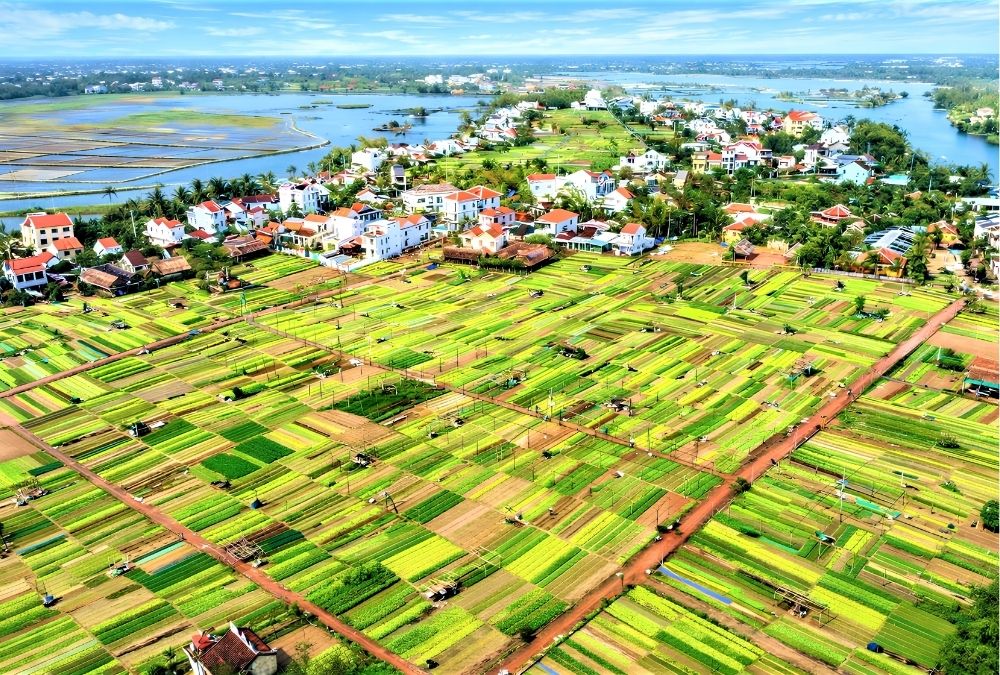
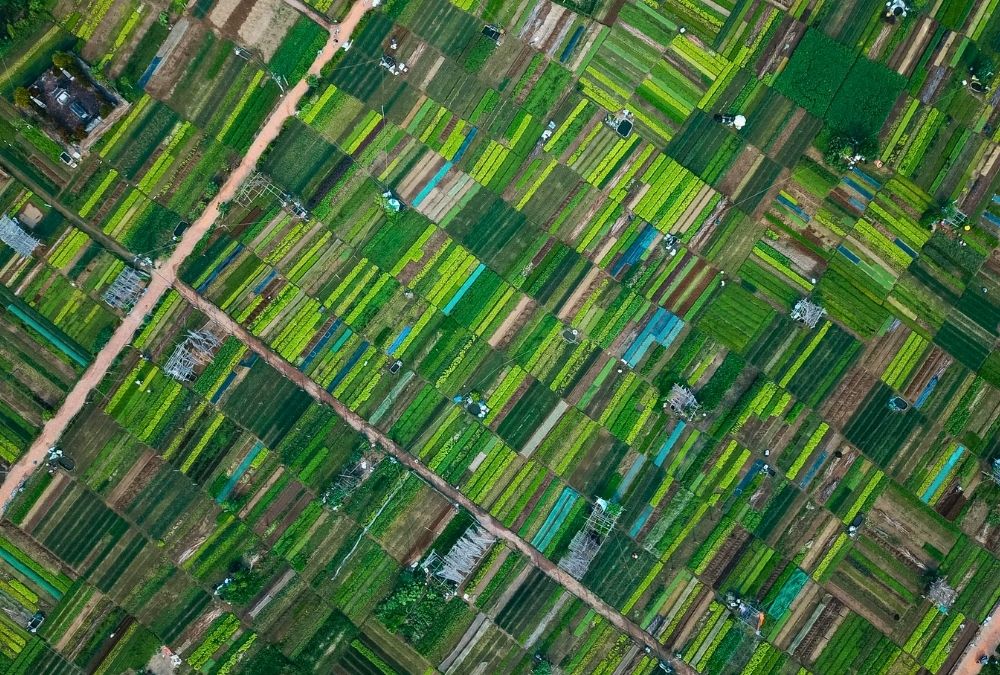
Tra Que Vegetable Village is located in Tra Que Hamlet, Cam Ha Commune, Hoi An City, Quang Nam Province. Set on a small river island near the coast, it is surrounded by the Co Co River and Tra Que lagoon. This unique setting provides a mild climate and fertile, well-watered soil, creating ideal conditions for growing fresh herbs and vegetables throughout the year.
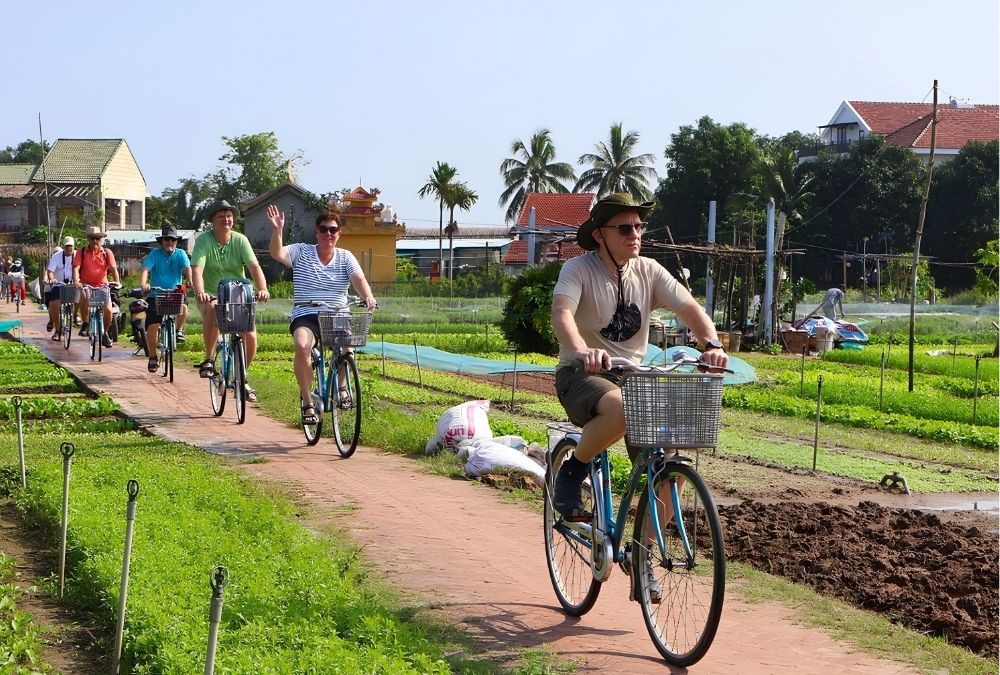
Located around 2-3 kilometres northeast of Hoi An Ancient Town, Tra Que is an easy bicycle ride away. The short journey takes you from the busy lantern-lit streets to a quieter landscape of green vegetable gardens, waterways and traditional farming life.
The settlers who first arrived here, about four centuries ago, lived by fishing. They noticed how much aquatic weed (rong) grew in the river, and that the weed, buried in the ground, turned the soil rich and crumbly. Many families put down their nets and took up the hoe. The village’s first recorded name, Nhu Que, is said to describe fragrant greens with a spicy kick like cinnamon, a fair summary of what the village still grows.
How Tra Que farmers grow such fragrant herbs
The village’s reputation rests on a few simple methods:
- River weed as fertiliser: Weed from the Co Cò is dug into the beds and rots down into soft, dark compost. Farmers have long worked without chemical fertilisers.
- Interplanting: Different herbs share the same plots, which also gives the fields their patchwork look.
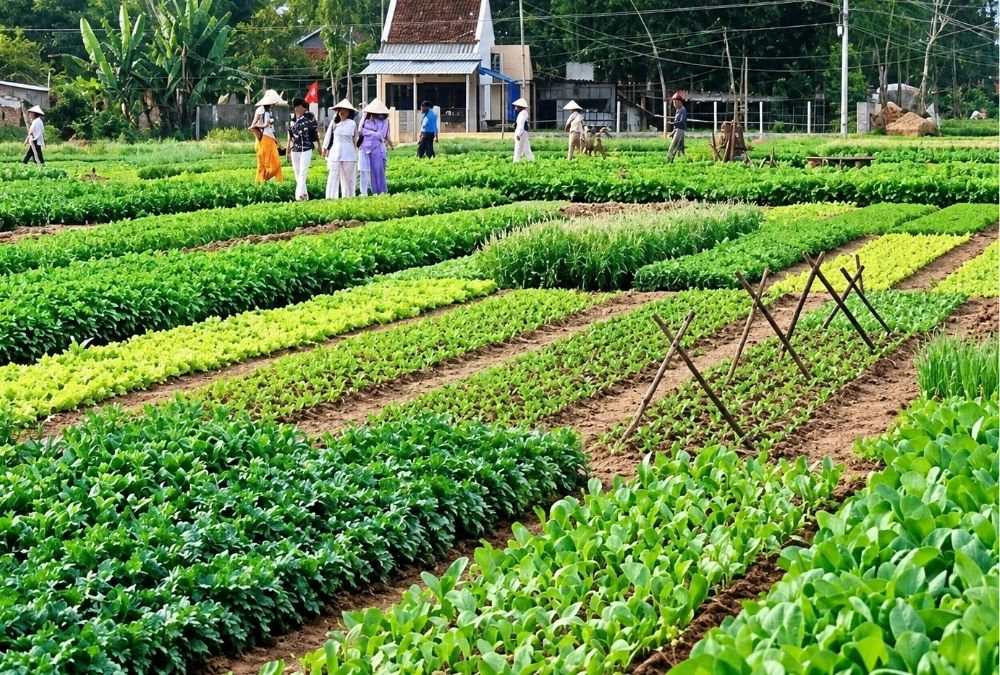
- Daily small harvests: Farmers cut only what is ready that day, so the market and restaurants get fresh leaves every morning.
- Natural covers: Instead of plastic sheeting, growers lay palm fronds over seedlings to shield them from dew and rain.
- Tidy bundles: Cut greens are cleaned and tied with bamboo strips or leaf cord before they go to market.
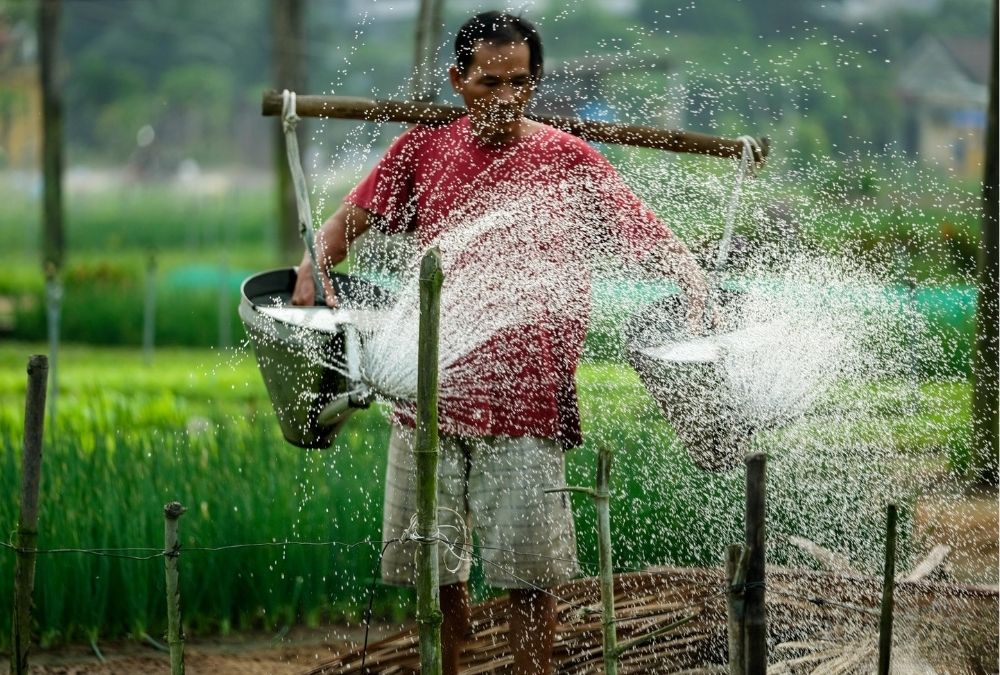
The result is the herb-heavy garden that Hoi An cooking depends on: coriander, mustard greens, perilla, basil, fish mint, lettuce and dozens more.
Read more: Hoi An Countryside Vespa Tour
What Tra Que herbs taste and smell like
A traditional Quang Nam raw-vegetable plate gives a sense of how the village’s produce is meant to be eaten: fish mint (diep ca), perilla (tia to), chives, basil, Vietnamese coriander, spicy mustard greens and banana blossom, with astringent sliced green banana, star fruit, pickled vegetables and bean sprouts alongside.
Eaten together, the flavours arrive in waves. First a peppery, slightly spicy heat, then sourness from the pickles and star fruit, a gentle sweetness underneath, and a dry, tannic bite from the banana that makes the mouth feel clean. One local writer described the whole as the countryside’s flavours compressed into a single leaf.
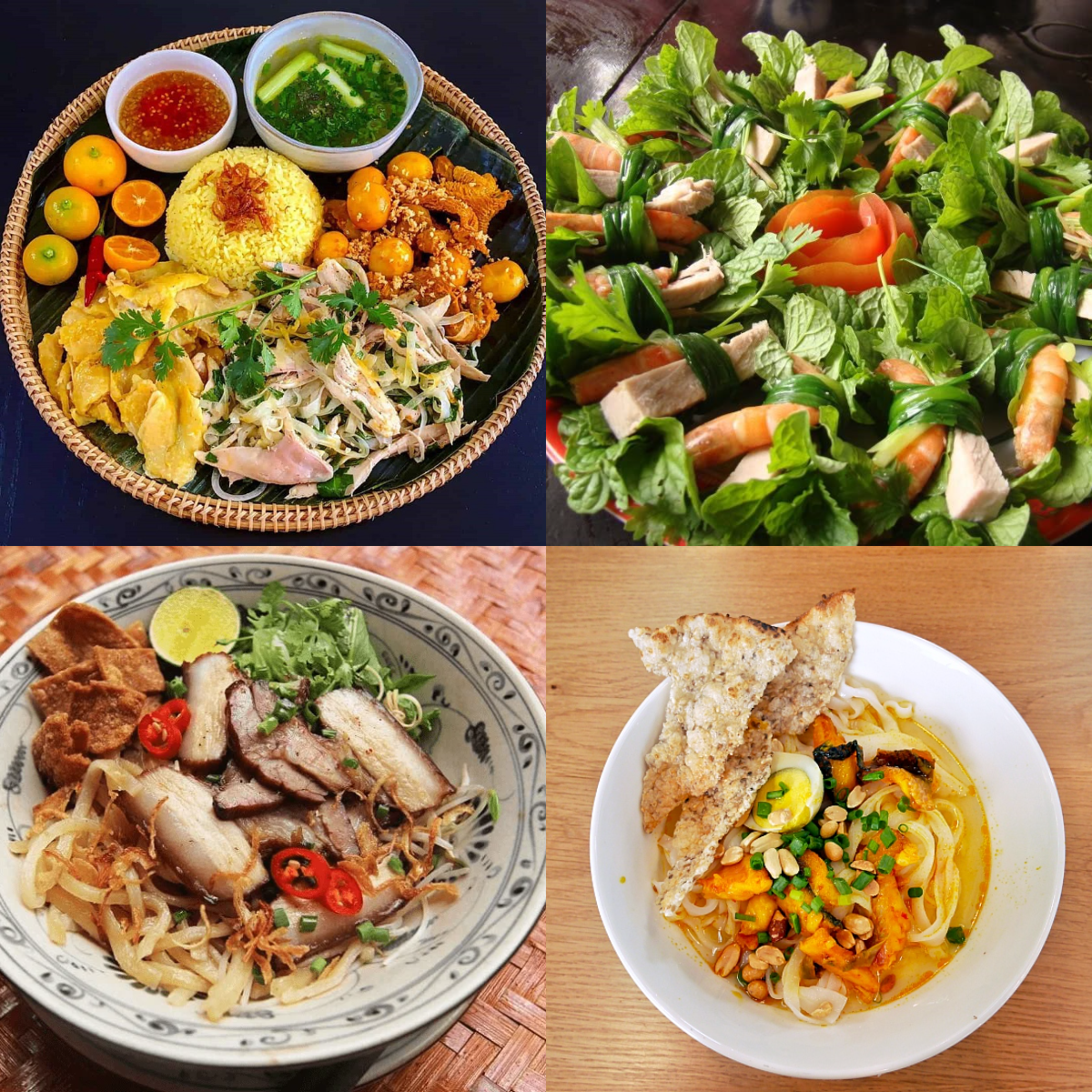
The village’s herbs also anchor several of the region’s signature dishes:
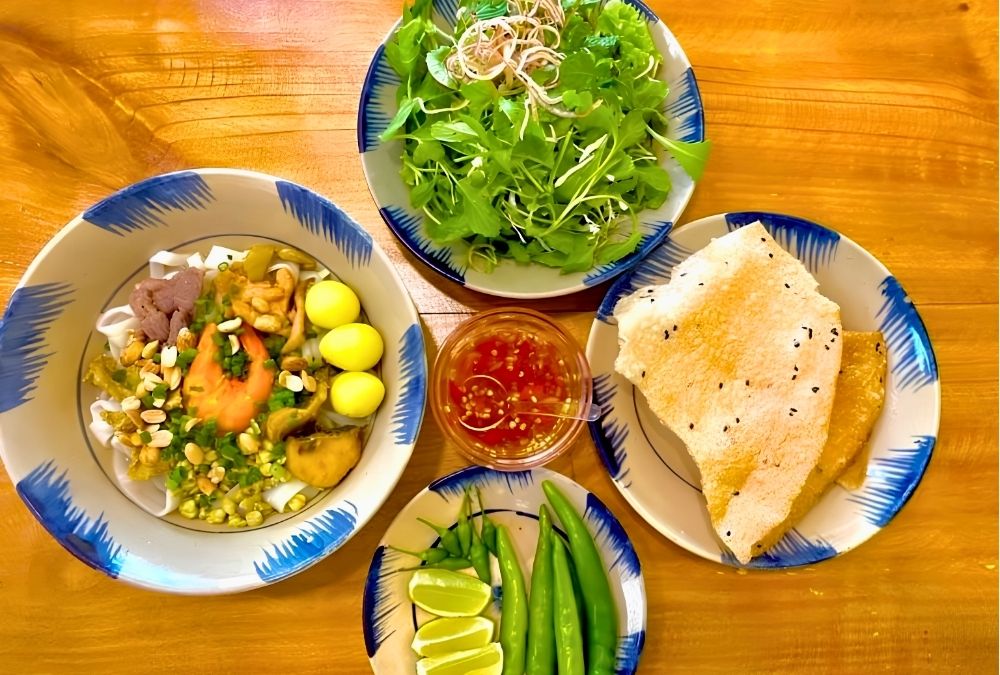
- Mi Quang: The noodle dish is only truly “Quang” with young mustard shoots, spring onion, lettuce and coriander from the village, plus shredded water spinach and paper-thin banana blossom.
- Cao lau: The famous noodles owe part of their reputation to fragrant herbs and green chillies from Tra Que.
- Tom huu: In the season when river shrimp are plentiful, this local dish pairs the shrimp’s sweetness with basil and spring onion from the village.
- Rolled fish: In the anchovy and scad season, freshly boiled fish is wrapped in rice paper with raw herbs and dipped in a garlic-chilli fish sauce.
- Com ga: The shredded chicken salad and the herb garnish that come with Hoi An chicken rice rely on the same greens (see our guide to four chicken rice restaurants in Hoi An).
Best time of day to visit
The pace here runs differently from the Old Town. Farmers go out at dawn to cut greens and take them to market, then rest through the hottest hours and return to the fields in late afternoon to plant and tend the beds. Most of those working the land are older residents, doing steady, light daily work rather than heavy seasonal labour.
That rhythm suggests the best times to visit: early morning, when the village is awake and the herbs are being cut, or late afternoon, when the work resumes and the heat has softened. Midday is when the fields are quietest.
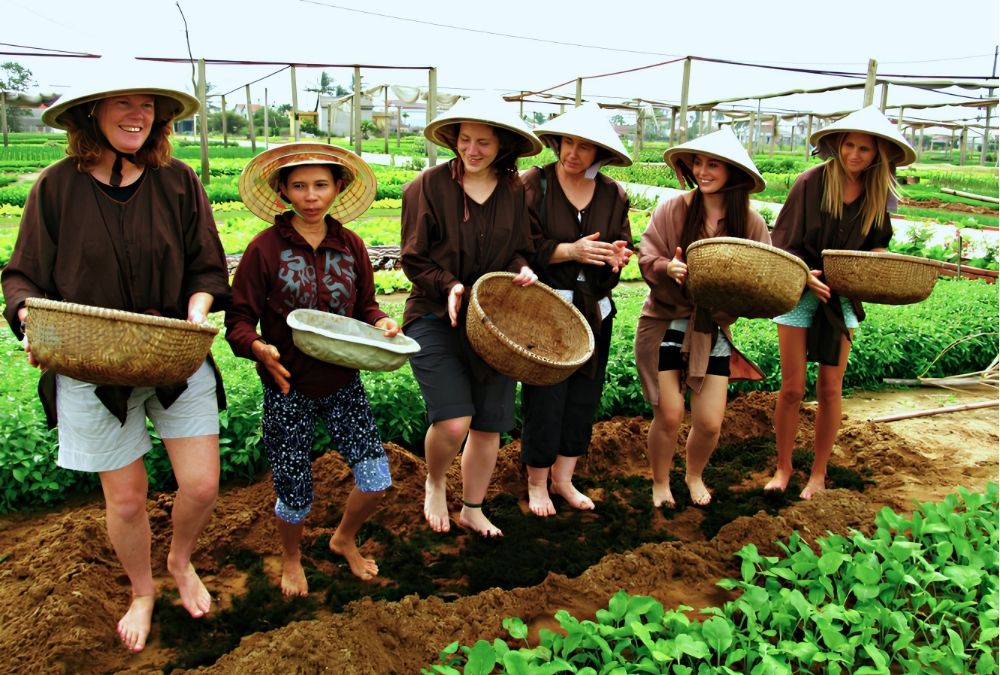
For visitors, the village has long offered hands-on farm experiences. Guests can dig, plant, water and tend the beds themselves, and homestays have been part of the village’s tourism since at least the early 2010s.
Read more: Tra Que Farming & Lantern Making
Costs and considerations for farming and cooking experiences
Several local operators offer cycling, farming and cooking experiences in and around Tra Que Vegetable Village.
| Experience | Approximate starting price |
| Cycling and farming experience at Tra Que | 650,000 VND |
| Cooking class and food tour | 960,000 VND |
| Half-day cooking class in the village | 1,850,000 VND |
These prices change, so confirm them with the operator before booking. Questions worth asking:
- Does the price include bicycle hire, transport from your hotel, the farming session, the cooking class and lunch?
- How many people are in a group?
- Is the visit in the morning, when the farmers are working?
- What is the cancellation policy in hot or rainy weather?
Tra Que’s cultural heritage and best tourism village recognition
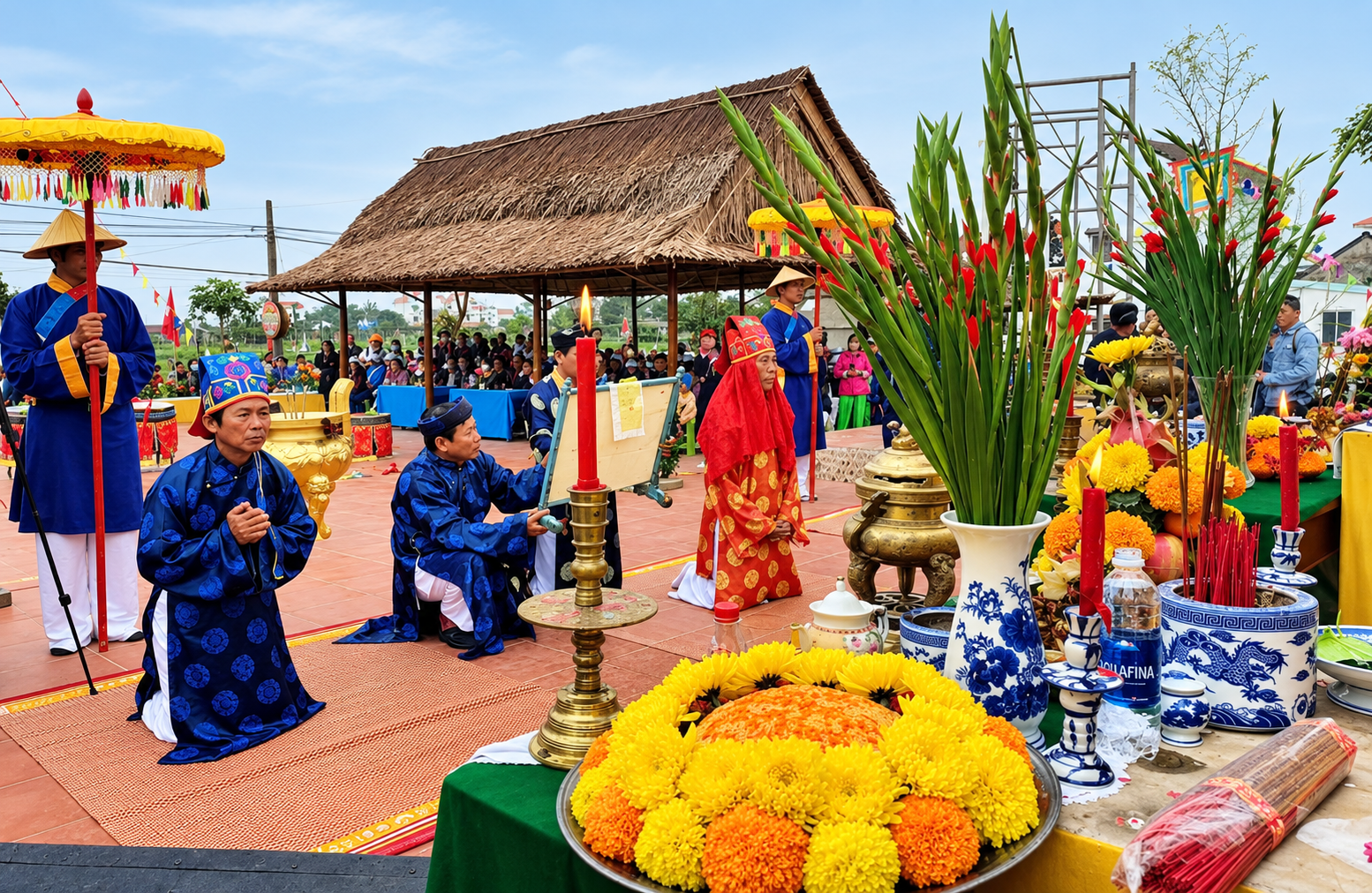
Tra Que is more than a farm. Historic sites within the village include an ancient Cham stone well, the Tho Than (Earth God) shrine, the Ngu Hanh (Five Elements) shrine and the tomb of Nguyễn Van Dien. The village also keeps the Cau Bong ceremony, along with local customs, beliefs and food traditions that trace its long history.
In April 2022, Vietnam’s Ministry of Culture, Sports and Tourism added Tra Que’s vegetable-growing craft to the national list of intangible cultural heritage, as a form of traditional folk knowledge and handicraft (Source: Vietnam Tourism).
The Best Tourism Villages programme aims to highlight how tourism can protect rural landscapes, knowledge systems, biodiversity, culture and local livelihoods, including farming and food traditions. Winners must show outstanding natural and cultural resources and a commitment to the UN Sustainable Development Goals.
| Detail | Figure |
| Announcement | 15 November 2024, Cartagena de Indias, Colombia |
| Applications reviewed | More than 260, from 60 countries |
| Villages recognised to date | 130 worldwide |
| Vietnam’s winners | Thai Hai (2022), Tan Hoa (2023), Tra Que (2024) |
| Tra Que households growing vegetables | 202 |
| Direct workers | 326 |
| Growing area | 18 hectares (a 2019 report cited roughly 40 ha) |
| Village origins | Sixteenth century |
Tra Que was Vietnam’s only winner in 2024. Nguyen Thanh Hong, director of Quang Nam’s Department of Culture, Sports and Tourism, said the recognition would help promote the Hoi An and Quang Nam brand to international visitors. The certificate was due to be presented at the network’s second annual session during an international rural tourism conference in Quang Nam from 7 to 12 December 2024 (Source: Nong nghiep & Moi truong).
The award also reflects wider policy. Quang Nam began promoting green tourism in 2019 and was the first province in Vietnam to issue provincial green tourism criteria, with 32 businesses certified. The village had been noticed abroad before: a 2015 list by the French newspaper Le Figaro of ten sights not to miss in Vietnam reportedly ranked Tra Que first (Source: VnExpress).
What travellers say about Tra Que
On TripAdvisor, Tra Que Vegetable Village holds a rating of around 4.6 out of 5 from 683 reviews. Visitors often describe the village as a refreshing change from the busy streets of Hoi An Ancient Town, offering a closer look at local farming traditions and everyday life.
Many travellers enjoy learning about the herbs and vegetables grown here, trying traditional farming activities such as preparing soil and planting crops, and tasting fresh local produce. The opportunity to dress as a farmer and work alongside local growers also makes the experience more memorable, particularly for families and those interested in Vietnamese rural culture.
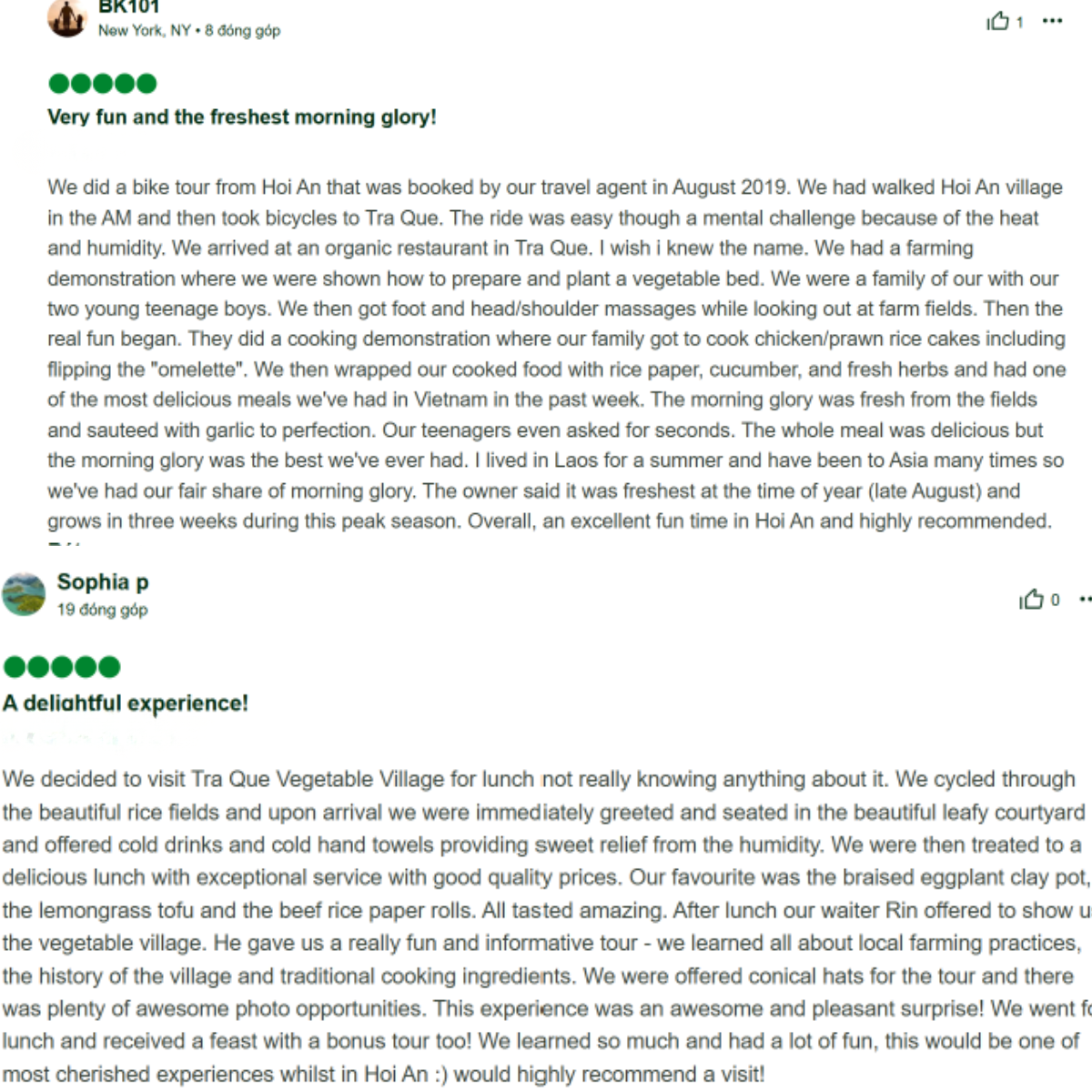
Another recurring highlight is the village’s peaceful atmosphere. With fragrant herb gardens, green vegetable plots and a slower pace of life, Tra Que offers a quieter side of Hoi An that many visitors appreciate.
How to fit Tra Que into a Hoi An trip
- Pair it with a meal: Visit the village in the morning, then eat chicken rice, cao lau or mi Quang in town and taste the same herbs on the plate.
- Go when the village is working: Early morning and late afternoon are when farmers are in the beds.
- Ask before you photograph: Most farmers are older residents at work, not performers.
- Confirm prices and hours locally: Farm experiences and homestays are run by individual households and operators.
Hoi An is usually described through its lanterns, yellow walls and river. Tra Que explains something less visible: why the town’s food tastes the way it does. A bowl of noodles or a plate of rice is only half a dish until the herbs arrive, and those herbs grow in beds of river weed, cut by hand, a short ride from the Old Town. A UN award has put the village on a global list, but the more lasting reason to go is simpler. It is one of the few places where the green side of the plate can still be traced back to the field.
FAQs
Where is Tra Que Vegetable Village?
Tra Que Vegetable Village is located around 2-3 kilometres northeast of Hoi An Ancient Town. Surrounded by the Co Co River and Tra Que lagoon, it is an easy cycling trip from the Old Town.
What is Tra Que Vegetable Village famous for?
Tra Que is known for its traditional herb and vegetable farming, fragrant local produce and sustainable growing methods. Its herbs feature in Hoi An specialities such as cao lau, mi Quang and com ga.
What is the best time to visit Tra Que Vegetable Village?
Early morning and late afternoon are the best times to visit, when farmers are typically working in the gardens and the weather is cooler. Midday is generally quieter and hotter.
What can visitors do at Tra Que Vegetable Village?
Visitors can explore the vegetable gardens, learn traditional farming techniques, plant and water crops, join cooking classes and sample dishes made with fresh local ingredients. Cycling through the surrounding countryside is another popular option.
How much do farming and cooking experiences in Tra Que cost?
Prices vary by operator and package. Indicative starting prices range from around 650,000 VND for a cycling and farming experience to 1,850,000 VND for a half-day cooking class. Confirm current prices and inclusions with the operator before booking.