




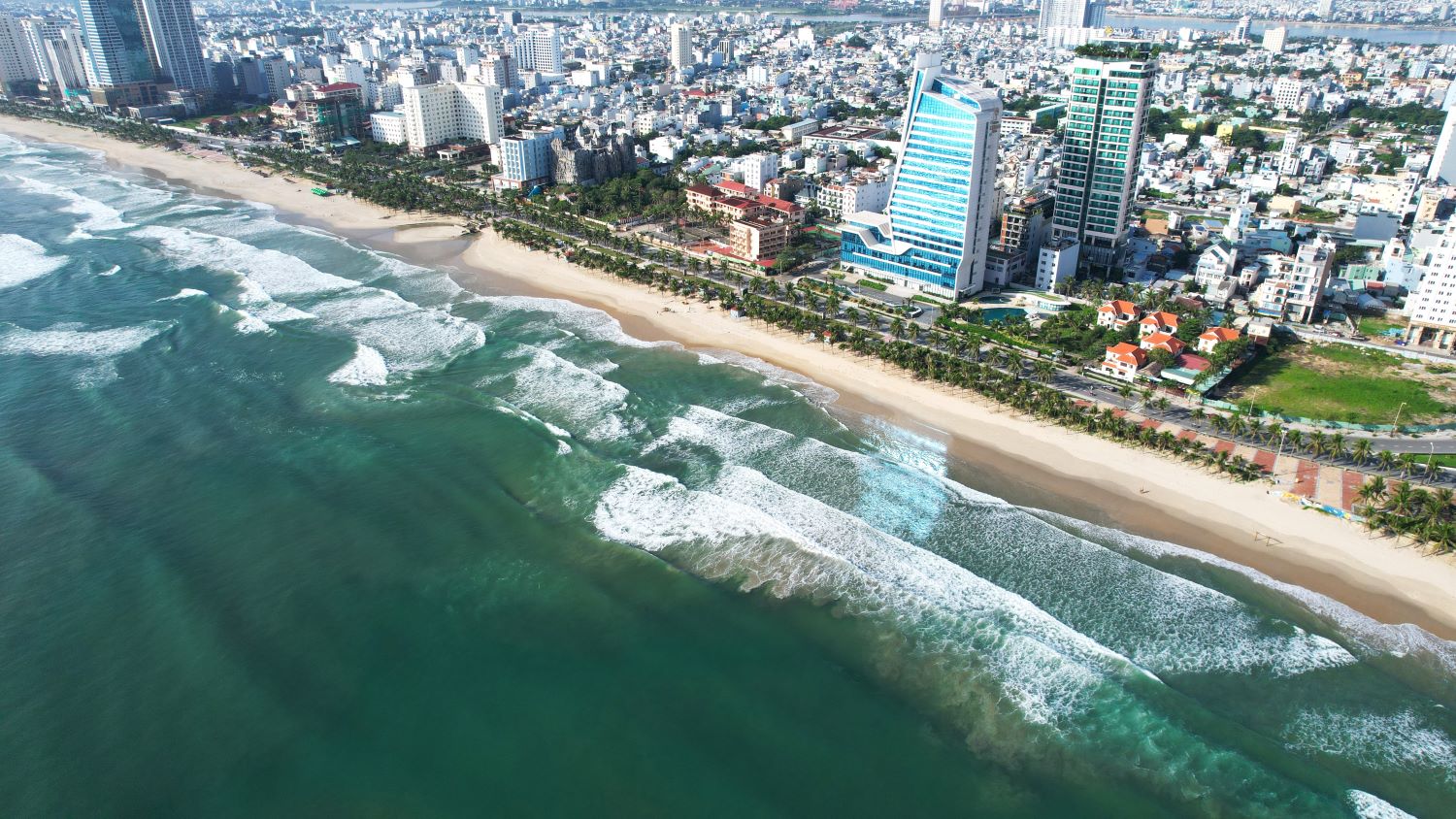
The Marble Mountains, or Ngu Hanh Son, are a cluster of five limestone and marble hills south of central Da Nang, on the coastal road towards Hoi An. Each is named after one of the five elements: Kim (metal), Thuy (water), Moc (wood), Hoa (fire) and Tho (earth). They make an easy half-day stop when travelling between the two cities.
What to see
Thuy Son, the Water Mountain, is the largest and the one most visitors climb. Stone steps lead up to pagodas, viewpoints and a network of caves. An elevator also runs part of the way up for those who prefer to avoid the first climb.
- Huyen Khong Cave – a high chamber lit by shafts of daylight falling through openings in the roof, with shrines and a large Buddha statue.
- Tam Thai and Linh Ung pagodas – historic Buddhist pagodas set among gardens on the mountainside.
- Vong Giang and Vong Hai viewpoints – lookouts over the river, the other four mountains and the long beach.
- Am Phu Cave – a cave at the foot of the mountain with sculptures depicting Buddhist visions of the afterlife.
- Non Nuoc stone village – workshops at the base of the hills where artisans have carved stone for centuries.
Practical tips
Wear shoes with good grip, as the steps are uneven and can be slippery after rain. Visit early in the morning or late in the afternoon to avoid the heat and the tour groups, and bring water. As the pagodas are active places of worship, dress modestly and keep your voice low inside the shrines.
From Hoi An the mountains are roughly a thirty-minute drive north. Many travellers stop here on the way to or from Da Nang airport, combining the visit with a seafood lunch on the nearby beach.