




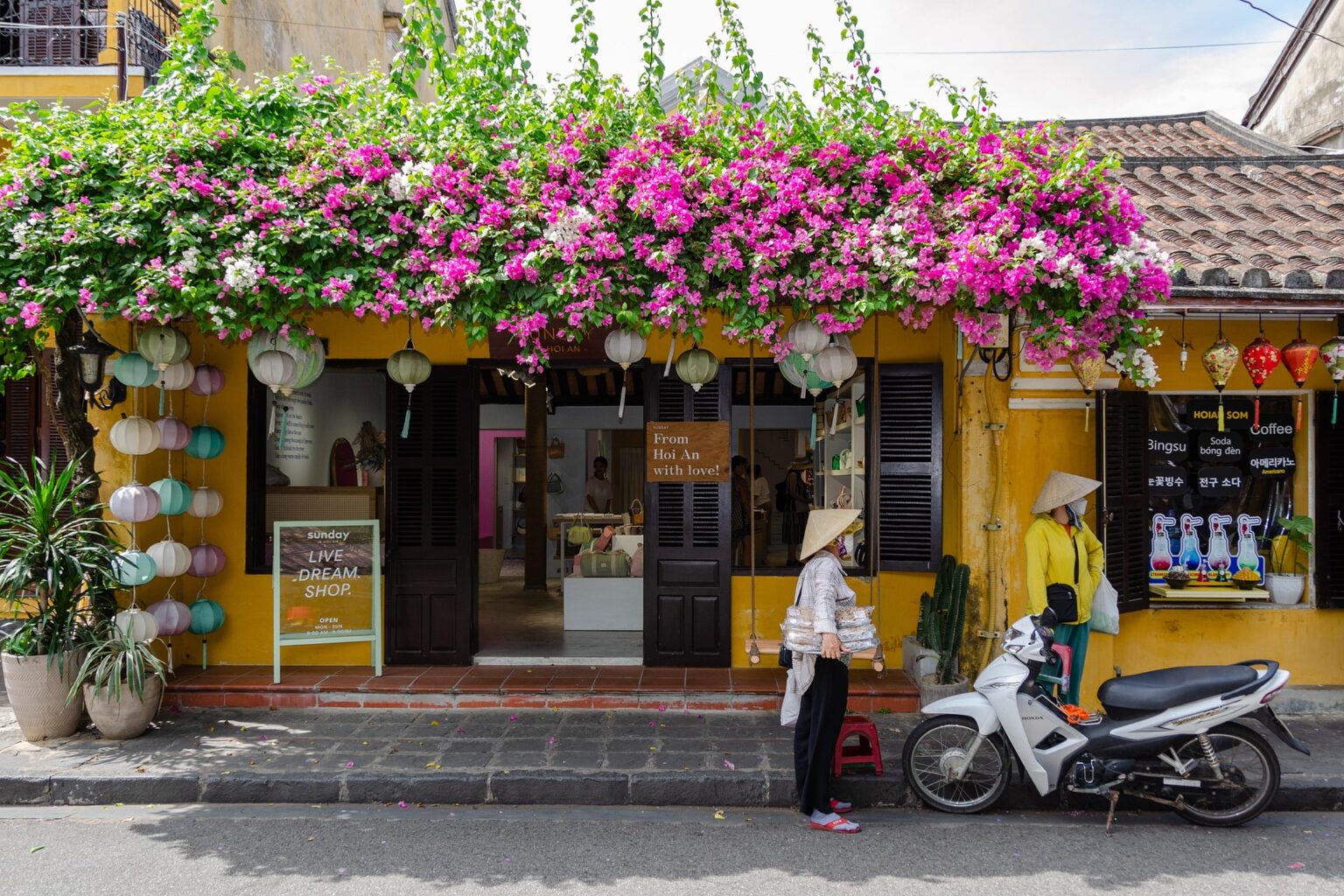
Hoi An is compact, flat and easy to navigate. Most visitors need nothing more than their feet and a bicycle, with a taxi now and then for the beach or the airport. Here are the options and when each makes sense.
On foot
The Ancient Town is a walking area. Motor vehicles are restricted on the main old streets for much of the day and evening, which makes strolling pleasant and safe. Everything inside the historic centre is within fifteen minutes on foot. Wear comfortable shoes and expect crowds on the riverfront after dark.
By bicycle
Cycling is the classic way to see the surroundings. Many hotels and homestays lend bicycles free or for a small fee. The roads to Tra Que vegetable village, An Bang Beach and Cam Thanh coconut forest are flat and take fifteen to thirty minutes. Ride on the right, watch for motorbikes at junctions and use lights after dark.
Taxis and ride-hailing
Metered taxis and app-based cars and motorbike taxis are widely available. An app shows the fare before you confirm, which avoids negotiation. They are the practical choice for beach resorts, evening returns and trips to Da Nang. For the airport journey, see how to get from Da Nang to Hoi An.
Motorbike rental
Motorbikes are easy to rent and useful for longer rides such as My Son or the Marble Mountains. Be realistic about the risks: you need a licence that is valid in Vietnam, and many travel insurance policies do not cover riders without one. Always wear a helmet.
Boats and shuttles
Small boats cross the river and offer short sightseeing rides, especially in the evening; agree on the price first. Many beach hotels run shuttle buses to the Ancient Town on a fixed timetable, and electric carts operate around the edge of the old quarter for those who prefer not to walk.
Which should you choose?
- Inside the Ancient Town: walk.
- Countryside and An Bang Beach: bicycle.
- Late at night, in the rain or with luggage: taxi or ride-hailing.
- Day trips: a private car or an organised tour is usually the least stressful option.